WARHAMMER
THE END TIMES
THE REVOLT OF
MALLOBAUDE
RULES
FOR WARHAMMER
8TH EDITION
An unofficial supplement
created by members of the WarFo
Prelude to the End Times
THE REVOLT OF MALLOBAUDE
Rules for Warhammer 8th Edition
An unofficial supplement created by members of the WarFo
Unofficial supplement created by members of the WarFo for the gaming community and fans of the Warhammer universe.
It was produced without authorization from Games Workshop. Names, trademarks, settings, and illustrations remain the
property of their respective owners and are reproduced solely to support the hobby and inspire players. If any material
causes a problem, please contact the authors so that it can be amended.
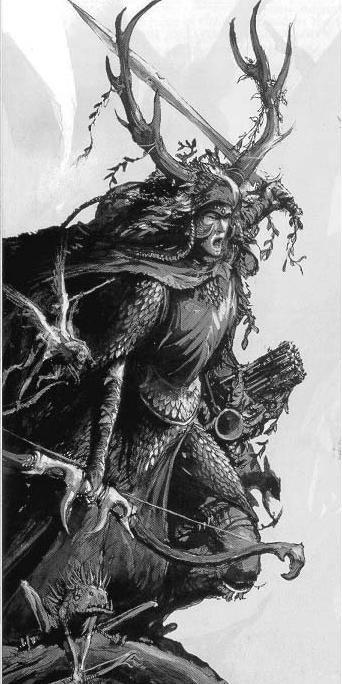
Cover illustration: Mousillon army by PumpkinBrother. The illustration above is from the Warhammer Bretonnia Army
Book, 6th Edition. Back-cover illustration by Games Workshop. Page background by bashcorpo (Creative Commons).
2
CONTENTS
Introduction
4
Credits
4
How to Use This Supplement
5
Campaign Rules
6
Bretonnian Rules
6
Civil War
7
Victor's Rewards
11
The Bretonnian Dukes
12
Duke Armand of Aquitaine
12
Duke Adalhard of Lyonesse
12
Duke Tancred II of Quenelles
13
Duke Alberic of Bordeleaux
13
Duke Huebald of Carcassonne
14
Duke Bohemond of Bastonne
14
Duke Hagen of Gisoreux
15
Duke Folcard of Montfort
15
Duke Taubert of L'Anguille
16
Duke Cassyon of Parravon
16
Duke Chilfroy of Artois
17
Duke Theodoric of Brionne
17
Enemies of the Lady
18
Mallobaude the Serpent
19
The Rebels of Bretonnia
21
The Mousillon Army
22
Arkhan the Black
23
Black Grail Knights
24
Traitors and Unreliable Allies
25
Wildwood Host
25
The Red Duke
30
The Dark Knight
31
The Banshee
31
The Alliance Against Undeath
32
Ariel, Queen of Athel Loren
33
Scarloc's Archers
35
Skaw the Falconer
37
Sceolan the Old
38
After the Campaign
39
Chevaliers-Moires
39
Crusade Army
41
The Kings of Bretonnia
42
Scenarios
45
Daemonic Assault on Mousillon
45
The Battle of Châlons
47
The Battle of Quenelles
49
On the Flanks
50
Father and Son
51
Attack on La Maisontaal
52
Duel of Necromancers
53
The Battle of Couronne
54
The Siege of Mousillon
55
Document version 1.5 - September 2017
3
The Revolt of Mallobaude is a two-player
campaign supplement set as a prelude to
the End Times. This campaign can be
played alone or in conjunction with the
other End Times supplements, allowing
you to replay - and perhaps influence -
the unfolding of the end of the Warhammer
world.
Note that this supplement is not complete.
The associated Game Guide must be used at
the same time. This Game Guide describes
the progress of the campaign regardless of
the game system used for it.
This supplement contains all the rules for
replaying this campaign with Warhammer
8th edition. Here you will find
The texts used for this work are taken from
the Warhammer: Nagash supplement, the
Wood Elves and Bretonnia army books for
Warhammer (all © Games Workshop), the
Knights of the Grail and the Duchy of the
Damned for Warhammer Fantasy Roleplay 2
edition (all © Black Industries).
Some rules are taken from the Wood Elf Army
Books for WFB 5 edition, Bretonnia for
WFB 6 edition, Vampire Counts and
Warhammer: Thanquol for WFB 8 edition. A
Part of the Civil War article published in
White Dwarf is also copied here. All these
items are © Games Workshop, and
reproduced here without permission.
new characters, new units, new army lists
describing the forces encountered during
the Revolt of Mallobaude, in order to
use them in the campaign, but also in your
other games of Warhammer.
Indeed, most of the elements of the game
can be reused outside of the campaign,
because we have designed these rules in a
modular way so that they can be used
separately or all at the same time.
This supplement is ultimately unofficial, and
you will therefore have to agree with your
opponents to use it. You are therefore also
free to modify aspects of it as you wish, if you
think that this will improve your gaming
experience.
Illustrations are taken from numerous
books and are all © Games Workshop
unless otherwise noted. The name of the
author of each illustration is mentioned
where possible. Most of the images were
initially published on the author's website
or on the Games Workshop website, and
not scanned from a printed work.
Additional texts are the work of (in
alphabetical order) Dreadaxe, Ilmarith,
Kass-Krâne, Thindaraïel. The supplement
was
developed
on
WarFo
(http://warhammer-forum.com),
in
the
“WFB Creation and Development” section,
and involved many other participants that
it would take a long time to cite all of them
here. We thank them all for their help!
INTRODUCTION
CREDITS
4
Introduction

The Revolt of Mallobaude is a two-player campaign supplement set during the prelude to the End Times. It can be played independently or alongside the other End Times supplements, allowing you to replay - and perhaps alter - the final days of the Warhammer world.

This volume is not self-contained. Use it alongside the companion Game Guide, which describes the course of the campaign independently of the rules system used to play it.

This volume contains all the rules needed to play the campaign with Warhammer Fantasy Battles 8th Edition.

It introduces new characters, units, and army lists representing the forces that fought during the Revolt of Mallobaude. They can be used both in the campaign and in other games of Warhammer.

Most of these game elements can be reused outside the campaign. The rules are modular, so you may use them separately or combine them as you wish.

This is an unofficial supplement, so agree with your opponents before using it. You are also free to alter any part of it if doing so improves your gaming experience.

Credits

The source texts used in this volume are drawn from Warhammer: Nagash; Warhammer Armies: Wood Elves and Warhammer Armies: Bretonnia (all © Games Workshop); and Knights of the Grail and Barony of the Damned for Warhammer Fantasy Roleplay, 2nd Edition (both © Black Industries).

Some rules are taken from Warhammer Armies: Wood Elves, 5th Edition; Warhammer Armies: Bretonnia, 6th Edition; Warhammer Armies: Vampire Counts, 8th Edition; and Warhammer: Thanquol. Part of the Civil War article published in White Dwarf is also reproduced here. All are © Games Workshop and appear without authorisation.

The illustrations come from numerous publications and are © Games Workshop unless otherwise noted. Artists are credited wherever possible. Most images were originally published on the artist's website or the Games Workshop website rather than scanned from a printed work.

Additional text was written by Dreadaxe, Ilmarith, Kass-Krâne, and Thindaraïel, in alphabetical order. The supplement was developed on the WarFo at warhammer-forum.com in the “WFB Creation and Development” section. Many other participants contributed along the way; there are too many to list here, but we thank them all for their help.

4
How to use these rules
As with the official End Times books, this
supplement is designed as a toolbox from
which you can draw items that can be used
in any game of Warhammer. Scenarios
require certain characters or units, but you
can easily transpose them with other
models or even other armies. The Armies,
Characters and Units represent forces that
distinguished themselves during the End
Times, but you can reuse them in other
battles, with the agreement of your
opponent.
We hope you find this supplement useful
to enhance your Warhammer games.
Necessary supplements
The
following
rules
are
not
always
complete. Several supplements, official or
unofficial, are required to use them. Here is
the list.
Army books:
• Vampire Counts 8th ed. ;
• Tomb Kings 8th ed. ;
• The Empire 8th ed. ;
• Wood Elves 8th ed. ;
• High Elves 8th ed. ;
• Bretonnia 6th ed. with compatibility FAQ
8th ed.
Supplements:
• Triumph & Treachery; • Bloodbath
in the Drylands; • The End Times -
Glottkin
This rules supplement focuses on The
Revolt of Mallobaude. You will therefore find:
The rules of Civil War: Taken from the
official supplement published in White
Dwarf, these rules will allow you to
play battles opposing armies from the
same book, here Bretonnia and the
Vampire Counts.
New Units and Characters: This
section offers you the rules for
Mallobaude, all of the Bretonnian
dukes living at the End Times,
several famous undead, a handful of
Wood Elf heroes, as well as variants
for the Green Knight and King
Louen Leoncoeur, depending on
their evolution in the campaign.
New Armies: Several lists are
offered
here,
either
lists
of
combined armies like the Army of
the Mousillon or the Alliance
against Undeath, or restricted lists
representing specific forces like
the Crusade Army or the Wildwood
Host.
Narrative Scenarios: This section
presents
several
scenarios
for
Warhammer based on the most
iconic battles of the campaign.
HOW TO USE THIS SUPPLEMENT
5
How to Use This Supplement

This rules supplement focuses on the Revolt of Mallobaude. It contains:

Civil War Rules: Adapted from the official rules published in White Dwarf, these allow battles between armies chosen from the same army book - in this campaign, Bretonnia and Vampire Counts.

New Units and Characters: Rules are provided for Mallobaude, every Bretonnian duke alive at the time of the End Times, several famous Undead, a handful of Wood Elf heroes, and variants of the Green Knight and King Louen Leoncoeur reflecting their development during the campaign.

New Armies: The book includes combined army lists such as the Mousillon Army and the Alliance Against Undeath, together with restricted lists representing specific forces such as the Crusade Army and the Wildwood Host.

Narrative Scenarios: These scenarios recreate the campaign's defining battles in games of Warhammer.

How to Use These Rules

Like the official End Times books, this supplement is a toolbox from which you can select material for any game of Warhammer. Some scenarios require particular characters or units, but they can readily be adapted using different models or armies. The armies, characters, and units represent forces that fought during the End Times, but may also be used in other battles with your opponent's agreement.

We hope this supplement enriches your games of Warhammer.

Required Supplements

These rules are not entirely self-contained. The following official and unofficial supplements are required:

Army books

  • Vampire Counts, 8th Edition
  • Tomb Kings, 8th Edition
  • The Empire, 8th Edition
  • Wood Elves, 8th Edition
  • High Elves, 8th Edition
  • Bretonnia, 6th Edition, with its 8th Edition compatibility FAQ

Supplements

  • Triumph & Treachery
  • Blood in the Badlands
  • The End Times: Glottkin
5
Certain rules are referenced here, to avoid
being found in the Game Guide. They
change depending on the system used.
The Kingdom Without a King: The
Loyalists are demoralized by the loss
of the King. They have a -1 penalty in
Ld for all their Leadership tests.
Here are some rules for Bretonnian
terrain features, which will enhance your
tables. These rules are taken from or
inspired by those of Storm of Magic.
Lady Chapel: Many altars and chapels
dedicated to the Lady are built on the
site of a heroic battle or the grave of a
Grail knight. Building. Any model
belonging to the Chaos or Death
alliances must re-roll their successful
ward saves as long as they are
within a 6" radius of an Altar or
Chapel of the Lady. In addition, any
unit of Bretonnians that enters the
Altar or Chapel gains the Unbreakable
special rule as long as they remain
there.
Pure Water Spring: The sacred energy
of the Lady of the Lake is found in
every pond or stream of clear water.
River. Any Wizard within a 6" radius of
a Pure Water Spring can roll up to four
dice instead of just one during their
channeling attempts. However, if they
roll at least three results of 6, they
must immediately roll on the Miscast
table. In addition, any unit gains the
Regeneration (5+) as long as it
remains within a 3" radius of this
water source.
Teeming Ranks: The legions of
Mallobaude are reinforced by the
fresh bodies of the victims of the
war. Any Mousillon army can add
1 zombie unit of maximum 200
points
per
necromancer
or
Master Necromancer in its army
(including Arkhan and Kemmler).
As part of this campaign, any Damsel or
Prophetess (including Morgiana the Fay) knows the
following spell in addition to their usual
spells.
Curse of the Lady 12+ to cast Scattering
wasted fragments of virtue and nobility,
the damsel calls down the greater wrath
of the Lady on the champions daring to
oppose Bretonnia. Hex spell that targets
an enemy character within 12". The
target
must
immediately
pass
a
Leadership test with a penalty of -3 or be
transformed into a toad. Models from
the Chaos or Death alliances must re-roll
successful tests, and Bretonnian models
can re-roll failed tests. As long as it is
transformed, a model cannot channel or
cast a spell, all its magic items and
other equipment (armour, weapons, etc.)
are ineffective, and its characteristics
are all reduced to 1 except for its Life
Points, which are not affected. At the
start of each of its following Magic
phases, a player can roll a die for each of
its transformed models. On a 4+ the spell
is dispelled and the model returns to its
normal state.
CAMPAIGN RULES
BRETONNIAN RULES
6
Campaign Rules

The following campaign rules appear here rather than in the Game Guide because their effects depend on the rules system being used.

The Kingdom Without a King: The Loyalists are demoralised by the loss of the King. They suffer a -1 penalty to their Leadership for all Leadership tests.

Teeming Ranks: Mallobaude's legions are reinforced by the fresh corpses of the war's victims. A Mousillon army may include one unit of Zombies worth up to 200 points for each Necromancer or Master Necromancer in the army, including Arkhan and Kemmler.

Bretonnian Rules

The following Bretonnian terrain rules add character to the battlefield. They are taken from, or inspired by, Storm of Magic.

Chapel of the Lady
Many altars and chapels dedicated to the Lady stand upon the sites of heroic battles or over the graves of Grail Knights.

Building. A model belonging to the Chaos or Death alliance must re-roll successful ward saves while within 6" of an Altar or Chapel of the Lady. A Bretonnian unit occupying the Altar or Chapel has the Unbreakable special rule for as long as it remains there.

Pure Water Spring
The Lady of the Lake's sacred power can be felt in every clear pond and stream.

River. A Wizard within 6" of a Pure Water Spring may roll up to four dice when channelling instead of only one. If three or more of those dice roll a 6, immediately roll on the Miscast table. In addition, any unit within 3" of the spring has the Regeneration (5+) special rule.

For this campaign, every Damsel or Prophetess, including the Fay Enchantress, knows the following spell in addition to her normal spells.

Curse of the Lady - Cast on 12+

Casting aside the tattered remnants of virtue and nobility, the Damsel calls down the Lady's wrath upon those champions who dare oppose Bretonnia.

Hex. The spell targets a single enemy character within 12". The target must immediately pass a Leadership test with a -3 modifier or be transformed into a toad. Models belonging to the Chaos or Death alliance must re-roll successful tests, while Bretonnian models may re-roll failed tests.

While transformed, the model cannot channel or cast spells. Its magic items and other equipment have no effect, and all its characteristics are reduced to 1 except for its Wounds.

At the start of each of the controlling player's subsequent Magic phases, roll a D6 for every transformed model. On a 4+, the spell ends and the model returns to its normal form. Mounts are unaffected.

6
As part of this campaign, we ignore the Faction
rule from the original expansion. It was used to
make the armies more thematic, but it doesn't
fit well with the theme of the campaign.
Camelot Fantastic, by John Howe
Note: The rules below are a copy of the Civil
War rules published in the monthly White
Dwarf issues n°213 to 216 from January to
April 2012. The article is not copied here in
full, only the rules necessary to play in
The Revolt of Mallobaude campaign are
reproduced.
During a Civil War,
armies from the same
people clash. In order
to
spice
up
these
clashes which could be
bland given the fact
that the armies use the
same
rules,
Jervis
Johnson wrote simple
rules adding an element
of chance to the battle.
These
rules
are
designed to not change
army selection, so you
won't need any prior
preparation.
To play a Civil War, you
will need to roll on two
of the tables below
before the battle. The
first is common to all
armies, the next two are
specific to the armies of
Bretonnia and Vampire
Counts. Depending on
the nature of the armies
staged, you will have to
take one or the other of
the
tables,
this
is
specified in the rules of
the campaign or the
scenario.
CIVIL WAR
7
Civil War

Note: These rules are adapted from the Civil War rules published in the French monthly edition of White Dwarf, issues 213-216, between January and April 2012. Only the rules needed for The Revolt of Mallobaude campaign are reproduced here.

For this campaign, ignore the Faction rule from the original expansion. It was intended to make armies more thematic, but does not suit the structure of this campaign.

In a Civil War, armies chosen from the same army book clash. Because both sides use many of the same rules, Jervis Johnson created a set of simple tables to add uncertainty and variety to the battle. These rules do not alter army selection, so no advance preparation is required.

Before the battle, roll once on two of the following tables. The first table is used by every army. The other two are specific to Bretonnia and Vampire Counts; the campaign or scenario rules specify which one to use.

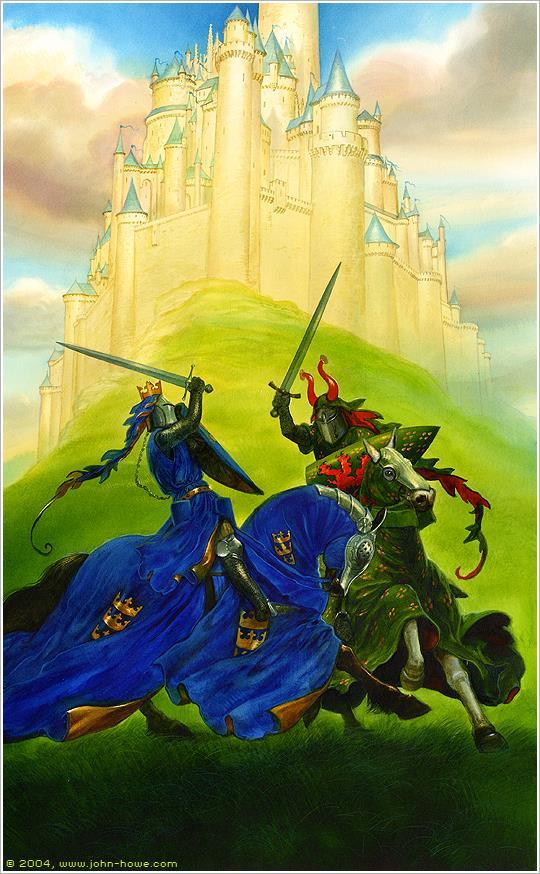
Camelot Fantastic, by John Howe
7
2D6 Table of Civil War
Annihilation The only way to resolve the dispute is
to completely destroy the enemy.
2
battle.
Thirst for Battle
3 Both armies are eager to fight.
All units on both sides follow the vanguard rule.
Overflowing Fury
4 Both armies are spoiling for a fight.
All units on both sides follow the devastating charge rule.
Imposters! Each side considers that its opponent
does not deserve to wear its colours.
5
standard and 500 points for a captured battle standard.
Our People Shall Triumph!
6
All units on both sides have Stubborn.
Enmity Both sides have accumulated
grudges over the centuries.
7
identical.
Rivalry The two generals hate each other. Each general
hates the opposing general, and wins
8
time, the game ends in a tie.
Vendetta
9 The two sides have been arguing for years.
All units of both armies hate all units of the opposing army.
Unreasonable hatred
10 Both sides are so blinded by hatred that they lose all reason.
All units of both armies are subject to frenzy.
We will not weaken
11 The two armies each believe in the righteousness of their cause.
All units of both armies are immune to psychology.
Guerrilla
12
general desires it.
All units on both sides are Unbreakable. Ignore the Game Length and Victory
Conditions rules during this battle. Instead, the game ends when one side
has been wiped out. His opponent then wins the
The victory points awarded for captured standards increase to 100 points per
Make two rolls in this table, relating the results of 7 and the results
immediately enters battle if his rival is killed. If both generals die at the same time
Both camps ravage their enemy's territories and constantly launch raids. Up to
three units from each army can have the Ambushers special rule if their
8
2D6Civil War Battle Table
2

Annihilation

The only way this dispute will be resolved is by the complete destruction of the other side.

All units in both armies are Unbreakable. Ignore the normal rules for Game Length and Victory Conditions. Instead, the game lasts until one side is completely destroyed; the surviving side wins.

3

Lust for Battle

The troops in both armies are desperate to get to grips with each other.

All units in both armies have the Vanguard special rule.

4

Pent-Up Fury

The two sides are seething with pent-up aggression.

All units in both armies have the Devastating Charge special rule.

5

Undeserving

Each side considers the other unworthy to carry the battle standards under which they march.

The Victory Points for Seized Standards increase to 100 points for each slain standard bearer and 500 points for the enemy Battle Standard Bearer.

6

We Will Not Yield

Neither side is willing to back away from this fight.

All units in both armies are Stubborn.

7

Ancient Enmity

The two sides have harboured numerous grudges against each other for centuries.

Roll twice on this table, re-rolling any further rolls of 7 or duplicate results.

8

Hated Rivals

The two generals despise each other.

Each Army General Hates the opposing Army General and wins the battle immediately if that rival is slain. If both Generals are slain at exactly the same time, the battle is a draw.

9

Bloody Feud

The two sides have been feuding for years.

All units in both armies Hate all units in the other army.

10

Unreasoning Spite

Both sides are so blinded by hate that they have lost all reason.

All units in both armies are subject to Frenzy.

11

We Shall Not Yield

Both rival armies believe completely in the justness of their cause.

All units in both armies are Immune to Psychology.

12

Guerrilla War

The two sides have been ravaging each other's lands in a vicious guerrilla war.

Up to three units in each army may have the Ambushers special rule if their commander wishes.

8
2D6 Chart of the Bretonnian Civil War 2 The
Lady's Favours: Will the Lady favour her sons?
the Lady are improved by +1.
A knight's armour can have miraculous effects.
automatically the magic item.
of the army proves the right of the General to command.
panic .
of honour.
terror until the end of the game.
7 Enmity: Both sides have accumulated grudges over the centuries.
8 Bravery: Each knight is determined to enter the legend.
telling you that your hero's feats of arms will be praised in the country!
they win the frenzy and tenacity rules.
extra can normally cause a miscast.
11 The Spears of Heroes: The blood of Gilles the Breton flows in the veins of his sons!
relaunched.
escape before another unit can attempt to drink from the Grail.
The first time a unit makes a saving throw due to the Lady's Blessing, it also makes a
Ld test. If it succeeds, its ward saves due to the blessing of the Lady
3 Thoroughbred: All steeds, pegasi and royal pegasi have a +1 bonus to Strength.
4 As proof of my esteem: A handkerchief, scarf or ribbon tied around the spear or on
Each player can choose a magic item from the list of Bretonnian magic items to give
to a Hero or Lord in their army, respecting the normal rules for magic items. If the
model is slain in melee by another character, that character wins.
5 The True King: Claimants to the throne are unfortunately very common, and only the battle standard
If the bearer of the battle standard is killed, all units in the army must take a Panic test.
6 Duel to the Death: Before the battle, a hero from each army is chosen to represent their side in a duel
Before the start of the game, each player must designate a Lord or a Hero from their force.
The two characters start in the middle of the table, in contact with each other, and will fight
normally from the following Close Combat phase. No other model can interfere in this
duel, and both models are Unbreakable. The winner of the duel then causes the
Make two rolls in this table, rerolling the results of 7 and the results of the same.
Each time a character kills an enemy in a duel, compare the points value of the two
protagonists. If the killed model was worth more points than the winner, the latter's side
scores 100 victory points. If the game does not use victory points, take comfort in
9 Jacquerie: The peasants feel themselves growing wings and refuse to bend to the will of the nobility.
Units that have the Peasant's Duty rule cannot use the Ld of a nearby knight, but
10 For the Glory of the Damsels: Magic invades the kingdom and reinvigorates the power of damsels and
prophetesses. When one of them casts a spell, add 1D6 to the casting value. This die
All rolls to wound of 1 made by charging knights (of any type) must be
12 The Grail: Place a pawn representing it in the centre of the table. Any unit (or character) of
Knights with an oath other than that of the Grail who places themselves in contact with the pawn must
stop and drink from the cup. The unit then performs a Ld test. In case of failure, it follows the stupidity
rule until the end of the game, otherwise it replaces its oath with that of the Grail. Only one unit per turn
can drink from the Grail. If an enemy unit is in contact with it, it must be destroyed or made to flee.
9
2D6Bretonnian Civil War Table
2

Favours of the Lady

Will the Lady favour her sons?

The first time a unit is called upon to make a ward save granted by the Blessing of the Lady, it must also take a Leadership test. If the test is passed, all ward saves the unit receives from the Blessing are improved by 1.

3

Thoroughbreds

All Warhorses, Pegasi, and Royal Pegasi have +1 Strength.

4

As a Token of My Esteem

A handkerchief, scarf, or ribbon tied around a knight's lance or armour may have miraculous effects.

Each player may choose one magic item from the Bretonnian magic items list and give it to a Hero or Lord in their army, following the normal rules for magic items. If the bearer is slain in close combat by another character, the slayer automatically takes the item.

5

The True King

Claimants to the throne are all too common, and only the army's great standard proves the General's right to command.

If the Battle Standard Bearer is slain, every unit in that army must take a Panic test.

6

Duel to the Death

Before the battle, a hero from each army is chosen to represent their side in a duel of honour.

Before the game begins, each player nominates one Lord or Hero. Place the two characters in base contact at the centre of the battlefield; they fight normally in the next Close Combat phase. No other model may interfere, and both characters are Unbreakable. The victor causes Terror for the rest of the battle.

7

Ancient Enmity

The two sides have harboured numerous grudges against each other for centuries.

Roll twice on this table, re-rolling any further rolls of 7 or duplicate results.

8

Valour

Every knight is determined to enter into legend.

Whenever a character slays an enemy in a challenge, compare their points values. If the slain model was worth more points than the victor, the victor's side scores 100 Victory Points. If the battle does not use Victory Points, take comfort that the hero's deed will be celebrated throughout the land!

9

The Jacquerie

The peasants rise in revolt and refuse to bend to the nobility's will.

Units with the Peasant's Duty special rule cannot use the Leadership of a nearby knight, but gain Frenzy and Stubborn.

10

For the Glory of the Damsels

Magic floods the realm, invigorating the powers of its Damsels and Prophetesses.

Whenever a Damsel or Prophetess casts a spell, add D6 to the casting total. This additional die can cause a miscast as normal.

11

Lances of Heroes

The blood of Gilles le Breton runs in the veins of his sons!

Knights of any type re-roll To Wound rolls of 1 in a turn in which they charge.

12

The Grail

Place a marker representing the Grail at the centre of the battlefield. A Knight unit or character with any vow other than the Grail Vow that moves into contact with the marker must stop and drink. Take a Leadership test: if failed, the unit or character has Stupidity for the rest of the battle; if passed, replace its current vow with the Grail Vow. Only one unit or character may drink each turn. If an enemy unit is in contact with the Grail, it must first be destroyed or made to flee.

9
2D6 Table of Vampiric Civil War
produced, the spirits of the dead awaken to relive an eternal battle.
those who tread the earth.
even more resistant.
both armies have a +1 bonus to Toughness.
character can use an item of this type).
Ghouls and Crypt Horrors have the Hatred special rule.
7 Enmity: Both sides have accumulated grudges over the centuries.
Swarms of bats and Black Coaches have +1 Strength.
seduction. Additionally, courtesans have +1 Strength.
powers Killing Blow and Dread Knight.
consider they know it twice.
energy are even more powerful.
Flying models).
2 The Night of the Ghosts: The mythical Geistnacht only occurs once every seven years. When she
Roll 1D6 for each of your units and each of your characters with the Undead rule. On a
6, the character/unit follows the ethereal rule. If an ethereal unit obtains a result of 6, it
loses the ethereal rule, because the specters become solid ectoplasms during the night!
3 Groaning Tombs: The concentration of dark magic drives the buried dead to try to catch all
At the end of each Magic phase, the player whose turn it is can designate an enemy
unit. Each model in the unit must pass a Strength test or be eliminated without any
save of any kind. A unit can only be designated this way once per game.
4 Bone Lords: The skeletons of these lands are fossilized or have been petrified, making them
Skeleton Warriors, Black Knights, Grave Guard, and Wight Kings units
5 Necrarch Relic Hunters: The ancient Necrarch Brotherhood has sent agents to collect
artifacts held by its rivals. All wizards gain a magic level, up to a maximum of 4. If
a character kills an enemy character in challenge, he can roll 1D6 for each of the
magic items that the latter held. On a result of 4+, he seizes the object and can use
it for the remainder of the battle (provided that the object is still usable and that the
6 The Great Hunt of Strigos: Clan Strigoi once again attempts to reestablish its former preeminence.
Make two rolls in this table, rerolling the results of 7 and the results of the same.
8 The Iron Fist of the Von Carsteins: The von Carsteins exert their influence over all those who attempt
to challenge their hegemony. All the von Carsteins, the vargheists, the vampire bats, the
9 The Power of Lahmia: Across the land, the Lahmian sorority attacks the armies of others
vampires. All female vampires in your army gain the Quickblood powers and
10 Sons of Abhorash: The Blood Dragons are ready to eliminate the impure vampire bloodlines.
Each player can field up to 5 free Blood Knights in their army, as long as they have the
appropriate models. These models must form a separate unit. Additionally, roll 1D6
per male vampire in your army. On a 4+, he belongs to the Ordo Draconis and wins
11 Animus Morti: The air vibrates with necromantic power, invigorating the dead.
All undead units can march, regardless of how far away the general is.
Additionally, all wizards know Vanhel's Danse Macabre spell in addition to the others.
If they get this spell during spell determination,
12 The Night of the Black Wings: The clouds are charged with dark magic, and the undead are capable of sucking it in
All flying units gain +1 Strength and +1 Initiative (this includes flying riders).
10
2D6Vampire Counts Civil War Table
2

Night of Ghosts

The fabled Geistnacht falls but once every seven years, when the spirits of the dead rise across the realm to do battle amongst their own.

Roll a D6 for each of your characters and units. On a 6, that character or unit gains the Ethereal special rule. If an Ethereal character or unit rolls a 6, however, it loses Ethereal as its members coalesce into solid ectoplasm!

3

Grasping Graves

The concentration of Dark Magic causes those in shallow graves to reach up and drag the living down among them.

At the end of each Magic phase, the player whose turn it is may nominate one enemy unit. Every model in that unit must pass a Strength test or be slain, with no saves of any kind allowed. A unit can be nominated only once per battle.

4

Lords of Bone

The skeletons raised from these lands have fossilised or petrified, hardening their ancient bones.

All Skeleton Warriors, Black Knights, Grave Guard, and Wight Kings in both armies have +1 Toughness.

5

Necrarch Relic Hunters

The ancient brotherhood of the Necrarchs has sent agents to recover the treasures of its rivals.

All Wizards have one additional Wizard level, to a maximum of 4. If a character defeats another character in a challenge, roll a D6 for each of the defeated foe's magic items. On a 4+, the victor takes that item and may use it for the rest of the battle, provided it has not been used up and is otherwise available to that character.

6

The Grand Hunt of Strigos

The troglodyte Strigoi clan is out in force, desperate to claw its way back into ascendancy.

Crypt Ghouls and Crypt Horrors have Hatred.

7

Ancient Enmity

The two sides have harboured numerous grudges against each other for centuries.

Roll twice on this table, re-rolling any further rolls of 7 or duplicate results.

8

The Iron Fist of the von Carsteins

The von Carstein family exerts its fell powers upon those who dare challenge its rule.

All von Carsteins, Vargheists, Fell Bats, Bat Swarms, and Black Coaches have +1 Strength.

9

Lahmia Ascendant

The royal sisterhood of the Lahmians reveals itself, striking at the heart of rival Vampire armies.

All female Vampires in both armies gain the Quickblood and Beguile Vampiric Powers. In addition, Pallid Handmaidens have +1 Strength.

10

Sons of Abhorash

The Blood Dragons rise in force, their honour demanding that they slay the lesser bloodlines.

Each player may field up to five Blood Knights in addition to their usual army, provided the models are available; they must form a separate unit. Roll a D6 for each male Vampire. On a 4+, he belongs to the Ordo Draconis and gains the Dread Knight and Master Strike Vampiric Powers.

11

Animus Morti

The air crackles with Necromantic power, hastening the dead to battle.

All Undead units may march regardless of their proximity to the General. In addition, every Wizard knows Vanhel's Danse Macabre; if a Wizard generates that spell normally, it counts as a duplicate.

12

Night of Dark Wings

The storm clouds are heavy with Dark Magic, strengthening the Undead creatures able to drink from them.

All units with the Fly special rule have +1 Strength and +1 Initiative, including the riders of flying mounts.

10
Favour of the Lady (Bretonnia): For
this battle, you have 1+1D3 rerolls to
use when you want. These are
re-rolls on any die roll (morale test,
roll to hit, save, spell roll, etc.).
Ancient Relic (Common): You can
assign a magic item of up to 75
points to one of your characters for
free before deployment.
Blood Kiss (Mousillon): A nobleman
has received the Blood Kiss and has
joined the ranks of the cursed. Choose a
champion or enemy character wearing
the Knight's Vow at the start of the
battle (not a famous character). If he is a
champion, on a 4+, he is transformed
into a Blood Knight champion. If he is a
hero, on a 5+ he is transformed into a
Newborn Vampire. If he is a Lord, on a
6+ he is transformed into a Vampire
Lord. In case of failure, he resists the
Kiss (or gets rid of his attacker). The
character
retains
all
his
magical
equipment, and receives an undead
mount corresponding to his initial
mount. He joins the Mousillon army as
an
independent
character
(even
a
champion).
Night
Summoning
(Mousillon):
Necromancers worked through the
night to pull additional corpses from
nearby tombs. Just before the battle,
add 2+1D6 skeletons or zombies, or
1+1D3 horsemen, to an existing unit
for free.
Focus of Death (Mousillon): The Undead
general managed to maneuver the
opponent so that the battle took place
near a site attracting death magic. The
Rebel player can place two Sylvanian
terrain features (See Warhammer: Nagash
- Book I) for free in his half of the table
before deployment.
Order from Above (Common): The
supreme
general
(Louen
or
Mallobaude) orders an unnecessary
battle to be ignored. His opponent finds
an empty battlefield. You can use this
reward to avoid one of the battles in
stages 2, 6, 8, 10. Your opponent is
considered the winner of the battlefield
(therefore he gains a reward), but you
cannot suffer any penalty linked to the
loss of a duke.
Challenge of Authority (Common): You
can play this stratagem as soon as one
of your characters is within 8" of an
enemy
character
possessing
a
Chivalrous Virtue or a Vampiric Power.
Your
character
launches
a
sonic
challenge to his opponent, who must
take it up. From this moment on, the
two designated characters can only
make a movement in the movement
phase if it brings them closer to each
other. Any movement that increases
their
distance
is
prohibited.
Models with Random Movement are not
affected by this rule. Once in contact,
during
the
melee
phase,
both
characters are automatically placed in
Challenge, neither of them will be able
to
escape
it.
The
character
who
launched
the
Authority
Challenge
benefits from a +2 bonus to the combat
result if he defeats his opponent.
Unexpected
reinforcements
(Bretonnia): You can bring in an
additional
unit
of
150
points
maximum during the battle (prepare
the unit before the battle, but keep it
secret). It can only come into play
from the 3rd turn. It enters from a
side of the table touching your initial
deployment zone (if your deployment
zone does not touch any side, for
example during a final square, it
enters from any side), after the
declaration of the charges, and can
perform a complete movement.
The winner of each battle gains one of these benefits, of the winner's choice. Rewards can be
combined, for example you can use two Ancient Relics in the same battle. Any reward used
is spent and cannot be reused in subsequent battles.
VICTOR'S REWARDS
11
Victor's Rewards

The winner of each battle chooses one of the following rewards. Rewards may be combined - for example, two Ancient Relics may be used in the same battle. Once used, a reward is spent and cannot be used again in a later battle.

Command from On High (Common): The supreme commander - Louen or Mallobaude - orders his forces to ignore a needless battle, leaving the enemy to find an empty field. Use this reward to avoid one battle at stage 2, 6, 8, or 10. Your opponent is treated as the victor and gains a reward, but you suffer no penalty for losing a Duke.

Challenge of Authority (Common): Use this reward when one of your characters is within 8" of an enemy character who has a Chivalric Virtue or Vampiric Power. Your character issues a resounding challenge, which the enemy must accept. From that point, either designated character may move in the Movement phase only if the move brings them closer together; any move that increases the distance between them is forbidden. Random Movement is unaffected. Once they are in base contact, the two characters are automatically placed in a challenge during the Close Combat phase, and neither may refuse. The challenger gains a +2 combat result bonus if they defeat their opponent.

Unexpected Reinforcements (Bretonnia): Prepare an additional unit worth no more than 150 points before the battle, but keep it secret. It may enter play from turn 3 onwards, from any table edge that touches your original deployment zone. If the deployment zone touches no table edge, as in a Last Stand, it may enter from any edge. The unit arrives after charges are declared and may make a full move.

Favour of the Lady (Bretonnia): For this battle, you have 1+D3 re-rolls. Each may be used on any dice roll, such as a Break test, To Hit roll, saving throw, or casting roll.

Ancient Relic (Common): Before deployment, give one of your characters a magic item worth up to 75 points at no cost.

Blood Kiss (Mousillon): A young noble has received the Blood Kiss and joins the ranks of the accursed. At the start of the battle, choose one enemy champion or character with the Knight's Vow; named characters cannot be chosen. A champion is transformed into a Blood Knight champion on a 4+, a Hero into a Vampire Thrall on a 5+, or a Lord into a Vampire Lord on a 6+. If the roll fails, the victim resists the Kiss or overcomes the attacker. A transformed model retains all its magic equipment and receives an Undead equivalent of its original mount. It joins the Mousillon army as an independent character, even if it began the battle as a champion.

Nocturnal Summoning (Mousillon): The Necromancers have laboured through the night to draw fresh corpses from nearby graves. Immediately before the battle, add 2+D6 Skeletons or Zombies, or 1+D3 cavalry models, to an existing unit at no cost.

Nexus of Death (Mousillon): The Undead general has manoeuvred the foe into battle near a site that draws Death magic. Before deployment, the Rebel player may place two Sylvanian terrain features from Warhammer: Nagash - Book I in their half of the battlefield at no cost.

11
Duke Armand of Aquitaine
Duke Armand of Aquitaine was one of the
younger brothers of the previous Duke and
he did not expect to inherit. As a Knight
Errant, he was renowned for both his
recklessness and his luck, and he refused all
offers of a fiefdom until King Louen himself
offered him a place in the royal household.
Once again, Armand distinguished himself
by his prowess, particularly by defeating
the Bestigor Darmal the Hooked in single
combat. Many expected him to be given a
Barony and made a Marquess.
Instead, after just two years, he left on a
Quest for the Grail. He left incognito, and
did not speak of his activities after his
return. A few minstrels attempted to gather
information about his doings, but he was
not the only Questing Knight to have
concealed his identity. Upon his return, as a
Grail
Knight,
he
was
appointed
standard-bearer of Bretonnia, a position
that suited him well.
Duke Adalhard of Lyonesse
Duke Adalhard de Lyonesse was a simple
man. He excelled on the battlefield, and off
it, he enjoyed feasting, gambling, and other
warrior pastimes. Some observers have
suggested from his style that his true
loyalty was to Ulric, not the Lady of the
Lake. They put this fact down to the Norse
blood which flows in the veins of the
Lyonesses of the north.
The Duke stayed away from the politics of
the duchy as much as possible. If a conflict
grew too large for him to continue ignoring,
he would bring in his troops, crush all
opposing parties, seize their lands, and
declare the matter resolved. This method
In 2519, the old Duke of Aquitaine died in
battle while intervening in one of the
duchy's endless blood feuds. Four of his
sons had died before him, and the youngest
was simple-minded and was kept locked
up. However, he also had two daughters
and they would normally have inherited
from him. The King chose to ignore them
and grant the dukedom to Armand. He had
to find his feet as an administrator; he was
eager to solve problems personally and by
force.
Grateful to the King, to whom he devoted
absolute loyalty, Armand remained guided
by his impulsiveness and by an intense
sense of honour. It is these qualities and
these
faults
that
led
him
to
face
Mallobaude, and to meet on the battlefield
the fate of all imprudent people.
Armand of Aquitaine is a Bretonnian Lord,
who has taken the Grail Vow, endowed
with the Virtue of Knightly Temper
and riding a barded warhorse. You can
choose his other options.
proved effective every time he used it, and
the nobles tried hard to plot without
attracting the attention of their overlord.
After the disappearance of the Fay Enchantress
Mallobaude's emissaries were quick
to convince Adélard that the Grail was only
a lie. The Duke then joined the insurgents,
and only recognized his error during his
agony, after King Louen had mortally
wounded him on the battlefield.
Adalhard of Lyonesse is a Bretonnian Lord,
who has taken the Knight's Vow. His Norse
blood gives him +1 in Weapon Skill, for an
additional cost of +10 points. You can choose
his other options.
THE BRETONNIAN DUKES
12
If he had paid attention to those around
him, perhaps he would have noticed the
value of his young cousin Jerrod. History
later proved that the young man would
become, much more than Tancred's heir, a
true guide for the last Bretonnians still
fighting to avoid the End Times.
Tancred II of Quenelles is a Bretonnian Lord
who has taken the Grail Vow, and endowed
with the Virtue of Purity. He always rides a
barded warhorse and carries a cavalry
lance. He always carries the following magic
items, for an additional cost of +55 points. He
cannot choose any other option.
Crown
Blade:
Magic
Weapon.
Against
Undead,
automatically
wounds and cancels armour saves.
Grail Shield: Magic Armour. Shield.
Any
undead
or
Daemon
in
base-to-base contact loses an Attack.
Alberic de Bordeleaux is a Bretonnian Lord having
taken the Knight's Vow and endowed with the
Virtue of Discipline. He also has the special rule
Self-discipline, all for an additional cost of +25
points. You may choose his other options.
Virtue of Discipline: The character
and his unit are never disorganized
when charged from the flank or rear.
Self-discipline:
Knights
of
the
Kingdom units must be promoted
to Knights of Alberic for +3 points
per model (+1 in Strength, or S4).
Duke Tancred II of Quenelles
Duke Tancred II has proven himself to be
an excellent lord for Quenelles. He had his
moment of glory when he defeated the
Necromancer Heinrich Kemmler and the
Undead Chaos Champion Krell, who had
allied with the Skaven and attacked
Maisontaal Abbey. But it was in 1513 (2491
C.I.) and the Duke was at the time of the
Mallobaude revolt an old man, stooped
and diminished, although he still had good
remnants of his former vigor.
Tancred, well aware that he was going to
die, worried about the future of the duchy.
He had had four sons, all dead or missing,
and the Quenelles inheritance seemed
very compromised. The final decision
rested with the King, but Duke Tancred
hoped to appoint a successor during his
lifetime.
Duke Alberic of Bordeleaux
Duke Alberic of Bordeleaux was famous for
his
personal
courage
and
incredible
self-discipline. We also know that he
expected the Knights of his household to
adhere to the same rigor and that he
dismissed those who did not do so. As a
result, his house was the smallest in
strength among all the Dukes, but his
Knights were among the best in the entire
kingdom.
The Duke always wanted to go on the Grail
Quest, but his father had died while he was
wandering and Alberic never felt able to
entrust responsibility for the duchy to
anyone else. But with his eldest son,
Frermund, having himself undertaken his
own Grail Quest, the aging Alberic began
looking for a steward to manage the duchy in
his absence when the Civil War broke out.
13
Duke Huebald of Carcassonne
Duke
Huebald
of
Carcassonne
was
relatively small, thin and lively rather than
powerful. He only spoke when it was
necessary, and even then, remained as
concise as possible. No one around him
had ever seen him smile, let alone laugh.
His union with his wife Schermilde was a
political marriage and the fact that the
couple had four children, all of whom came
from
the
Duke,
was
a
matter
of
astonishment. However, the Duke was
respected by all his men. He was the best
war leader the Gasconnais had had for
generations and a courageous warrior to
boot. Unlike many Bretonnian Knights, he
was willing to use ambushes and feints to
defeat his monstrous adversaries. He
claimed that the greenskins who came
down from the mountains to burn villages
did not deserve to be fought honourably.
Duke Bohemond of Bastonne
Duke Bohemond of Bastonne was a Grail
Knight particularly famous for fighting
monsters, so much so that he was
nicknamed “the Bane of Beasts”. He was
also known for refusing to fight inferior
opponents, even if they attacked him. He
would just knock them out and turn his
attention elsewhere. When his fame grew,
he traveled to many places in Bretonnia
and beyond to find suitable adversaries.
Although Bohemond was a descendant of
the line of Gilles le Breton, he showed
absolute loyalty to King Louen and had no
desire to seize the crown. In fact, he
affected power so little that he delegated
the administration of his duchy to his
Steward, and matters of justice to his
Grand Justiciar. Unfortunately, he had
little ability to judge the character of others
and he had to replace these men at an
alarming rate.
Although he used deception, Huebald
could not stand it being used on him. Also
when Mallobaude told him his “truth”
about the Lady of the Lake, Huebald flew
into a rage, matching Mallobaude’s fury
when the latter had his revelation. The two
men were subsequently closely linked,
until the premature death of the Duke
during the battle between him and the
King's forces.
Huebald of Carcassonne is a Bretonnian
Lord who took the Knight's Vow. Lively and
Fast, he has a +1 bonus on his Initiative
characteristic. He also has the Strategist
special rule. All of these improvements have
an additional cost of +15 points. You can
choose his other options.
Strategist: An army regiment with a
maximum of 200 points can benefit
from the Ambush special rule.
Bohemond of Bastonne is a Bretonnian
Lord who has taken the Grail Vow, and
endowed with the Virtue of the Impetuous
Knight. He always rides a barded
steed, and always carries the following
magic items, for an additional cost of +95
points. He cannot choose any other option.
Bestial
Mace
of
Bastonne:
Magic
Weapon. +2 Strength, multiple wounds (1D3).
Shield of Bohemond: Magic Armour.
Shield. If Bohemond suffers at least
one hit from a model possessing a
magic weapon, the latter is destroyed
on a roll of 4+ on 1D6 (make a single
roll, regardless of the number of
hits). An enemy whose magic weapon
is destroyed counts as having a hand
weapon. If the enemy has more than
one magic weapon (a pair of weapons
counts as a single weapon), roll 1D6
to see which one is destroyed.
14
easily manage the northern Gisoreux. The
Duke's
intransigence
in
matters
of
personal virtue did not help matters: he
continued to rebel against practices that
he considered unacceptable, but that the
inhabitants of northern Gisoreux had
perpetuated for generations. Duke Hagen
rarely strayed from the King. The latter
liked to have the Duke on hand to benefit
from his advice, and the Duke, although
he did not admit it to himself, wanted to
keep an eye on his overlord.
After the defeat of Louen and the debacle
of Quenelles, Hagen faced Mallobaude in
single combat, but the vampire was too
powerful, and the exemplary knight was
slain.
Hagen of Gisoreux is a Bretonnian Lord
who has taken the Grail Vow, and
endowed with the Virtue of Chivalrous
Temperament. He has the Chivalrous Spirit
special rule, for an additional cost of +30
points. You may choose his other options.
Chivalrous Spirit: Hagen is Stubborn as long
as he benefits from the Lady's Blessing.
intervene in person if he could. Once a
village was liberated, he would hold an
impromptu court on site to hear grievances
about injustices and restore justice.
Folcard was a tall man, with dark hair cut
very short, and a fierce and intense look.
Many young peasant girls dreamed of their
Duke, like most noble ladies. All were
mourned when he was struck down by
Mallobaude himself while defending his
duchy.
Folcard of Montfort is a Bretonnian Lord
who has taken the Knight's Vow, and is
endowed with the Virtue of Care. You
can choose his other options.
Duke Hagen of Gisoreux
Duke Hagen of Gisoreux was a Grail
Knight, close companion of King Louen.
The Duke was entirely devoted to the cause
of chivalry, even more so than most Grail
Knights, and the King knew he could trust
his advice on matters of chivalry. When he
made a decision, Duke Hagen did not worry
about the consequences and the King did
not always follow his advice to the letter: he
knew that sometimes it is better to forget
chivalry when it comes to saving hundreds
of lives.
The
Duke
sometimes
had
difficulty
accepting these decisions. He knew well
that the King had broader responsibilities
and always had confidence in his friend's
attachment to the ideals of chivalry.
However, each time King Louen set aside
these ideals for the common good, the
Duke feared that he could be corrupted.
He settled in Couronne to spend most of
his time there and could now
Duke Folcard of Montfort
Duke Folcard of Montfort was something
of an anomaly among the Dukes of
Bretonnia. He was a formidable warrior,
but he almost never fought on horseback.
The mountains that cover his duchy
seriously handicap mounted fighters, and
the Duke could tolerate no delay in his fight
against the Greenskins whose lands were
infested before the arrival of Chaos.
Duke Folcard was perhaps the Bretonnian
nobleman most beloved by his subjects. He
seemed to sincerely care about the peasant
villages and tried to help them when they
were under attack from raiders. He set up
a network of lanterns to communicate in
the mountains, which allowed relief troops
to arrive on time in most cases, and he
15
Duke Taubert de L’Anguille
Duke Taubert of L'Anguille was a sailor in
his youth, but he neither set foot on a ship
nor lived within sight of the sea for more
than fifteen years after his last sea
expedition. He confided the reasons to no
one. After his return, Duke Taubert settled
at Grasgar Castle, on the edge of the Forest
of Arden, a castle that the Dukes had used
as a hunting lodge for generations, but
Duke Taubert had it enlarged and used it
as a base for his expeditions into the heart
of the forest. He claimed his goal was to
defeat the Beastmen, but many believed he
simply wanted to stay as far from the sea
as possible.
Because of his absence, the Duke was
unknown to most of the townspeople in
the port of L'Anguille. Among the peasants
in the countryside, things were very
different. To them, the Duke was a hero
who fought the Beastmen himself. He built
a series of watchtowers all around the
forest, which raised the alarm at Grasgar
Castle when bands of raiders were spotted.
Armed troops were then sent, often led
Duke Cassyon of Parravon
Duke Cassyon of Parravon was the
youngest Duke of Bretonnia at the time of
the Civil War, being just over twenty years
old. Regardless, he was a Grail Knight and
he rode a Royal Pegasus. His father died
while Cassyon was on his Grail Quest and
the young Duke did not know of his
status until returning to Parravon.
The
Duke's
advisors
found
him
exasperating. He was an open and
enthusiastic young man, who had no ill
will towards anyone, which made him
impossible to hate. On the other hand, he
thought he could fulfill his duty as Duke
by simply riding the skies above his duchy
and slaughtering monsters. He was quite
gifted in this
by the Duke himself. More than one
village
was
saved
from
absolute
destruction by the timely arrival of the
Duke's men, and he himself saved the
lives of some of his subjects, which
greatly improved their opinion of him.
In the years before the End Times, the
Beastmen grew increasingly cunning, and
the more brutal herds turned their attention
to Lyonesse, Artois, and Couronne. This
caused tensions with the surrounding
duchies and some nobles muttered that
Duke Taubert would have done better to
defeat the Beastmen rather than drive
them back to the lands of other lords.
Taubert of L'Anguille is a Bretonnian Lord
who took the Knight's Vow. He is subject to the
special rule below, which reduces his cost by
-10 points. You may choose his other options.
Sea Phobia: Taubert must perform a
terror
test
at
the
end
of
his
movement phase if he is 12" or less
from an aquatic environment.
domain, but he would also have had to
worry
about
taxes,
justice
and
administration,
because
the
Duke's
neglect of the diplomatic responsibilities
of his office gave rise to latent and
growing resentment.
The prowess of Duke Cassyon had not
escaped the Parravonese and rumors
claimed that he was the reincarnation of
Duke Agilgar.
Cassyon of Parravon is a Bretonnian Lord
who has taken the Grail Vow, and endowed
with the Virtue of Purity. He always rides a
Royal Pegasus. You may choose his other
options.
16
Therefore, people did their best to avoid
having to bring a case to the Duke, which
suited Chilfroy just fine.
The Duke spent a lot of time riding deep in
the forest, and there were rumors that he
did not fight the Beastmen but made deals
with them. However, it was in Mallobaude
that he found an echo of his expeditious
justice, so he joined the insurgents after
the Battle of Châlons, thinking he would
find in this powerful duke all the
justification for the authority of the strong
over the weak.
Chilfroy of Artois is a Bretonnian Lord,
who has taken the Knight's Vow. Robust
and strong, he has a +1 bonus on his
Strength characteristic but this simple and
uncharismatic man also has a -1 penalty in
Leadership, all for an additional cost of +10
points. You may choose his other options.
Rumor
also
had
it
that
the
Duke
enthusiastically practiced adulterous love
sung
by
minstrels.
At
the
time
of
Mallobaude's revolt, and for the months
that
followed,
Theodoric
remained
mysteriously absent. In reality, he was
residing in penance at the Maisontaal
Monastery, after a Damsel of the Lady had
reproached him for his behavior with the
wife of one of his vassals. It was while
protecting this monastery that he met his
death at the hands of Krell the Wight.
Theodoric of Brionne is a Bretonnian Lord
who has taken the Knight's Vow and carries
a great weapon. He also has the special rule
Frenzy, which adds an additional cost of
+10 points. You may choose his other options.
Duke Chilfroy of Artois
Duke Chilfroy of Artois was an immense
man, stronger and more robust than any of
his Knights or nobles. He was also famous
for his austerity: no one ever heard him
laugh and it was claimed that he only
smiled at the devastation he sowed among
his enemies. While he wasn't very subtle,
he was a great warlord when the strategies
were simple and those who followed him
only needed a little motivation.
The Duke spent most of his time hunting
monsters, Beastmen and other creatures
from the depths of the Forest of Arden.
The great hall of the Château d'Artois was
decorated with stuffed heads and furs
from his greatest victories. This is where
he held his court of justice. He was known
for settling cases quickly by declaring the
higher-ranking plaintiff in the right and
meting out brutal punishment to the loser.
As a result,
Duke Theodoric of Brionne
Duke Theodoric of Brionne sometimes
seemed to have a split personality. In
battle, he was a true terror, swinging his
great battle ax with deadly efficiency. He
cut down terrifying enemies, leaving their
corpses to the cold earth. He was always on
the front lines guiding his troops and he
rarely returned without injury. Among his
Knights, it was rumored that a spirit of war
had taken possession of him, for he
seemed
to
take
great
pleasure
in
massacres.
Far from the battlefield, the Duke was a
protector of the arts, connoisseur of music
and singing. He was the greatest patron of
the minstrels of Bretonnia and listened
attentively to their love stories. There
Authors: Ilmarith, with the help of Warfo
Grail for Warhammer Fantasy Roleplay, 2nd Edition.
Sources: Bretonnia army book for Warhammer 5 and 6 editions, Knights of the
17
Mallobaude one day had a vision of the Lady that
changed his life. From a Questing Knight,
piously searching the paths for the path that
would lead him to the Lady of the Lake, he
became the fiercest of his adversaries, determined
to exterminate the cult of the Lady.
The army he assembles is disparate, and
will be even more so after the revelation
that he has become a vampire, but certain
rules are common to these two armies and
to various characters. You will find them
gathered here for greater simplicity.
The Black Grail Vow Those closest to
Mallobaude are called the Knights of
the Black Grail, obsessed with the
Black Grail that Mallobaude presented
to them. Subsequently, Mallobaude
would later lead them into undeath.
This oath replaces the Grail Vow. The
Oath of the Black Grail grants an
ward save of 6+, as well as the
fear rule. The Grail result in the
Civil War table is considered the Black
Grail for Rebels who drink from it,
granting them the Black Grail
Vow.
Death to the Lady! Any model in a
Rebel army, a Mousillon army or an
army
led
by
Mallobaude,
and
possessing the Blessing of the Lady
rule must exchange it for the Sworn
Enemy of the Lady rule.
Sworn Enemy of the Lady Hatred (Servants
of the Lady). The Lady's Servants are
the
Prophetesses
(including
Morgiana) and Damsels, the knights
bearing the Grail Vow and the Grail
Pilgrims. Standard of Mousillon
In
an
army
of
the
Mousillon,
Vampire Counts or Legion of Undeath
which includes the Knights of the
Black Grail, the unit can carry the Cursed
Pennon of the Mousillon at no
additional cost, you would be wrong
to deprive yourself of it! Otherwise,
in a Rebel, Mousillon, or Legion of
Undeath army including Mallobaude,
the Battle Standard Bearer
(whether a Paladin or a Wight
King) can carry the Cursed Pennon of
the Mousillon for +10 points.
Cursed
Pennon
of
Mousillon
This
banner
was taken by the undead
from the dungeon of Duke
Maldred
of
Mousillon.
Legend has it that it carries
the curse of the city and
that all those who wear it
suffer from bad luck.
If the enemy captures this
standard,
he
immediately
suffers 1D6 Strength 4 hits,
distributed as shooting hits.
The unit also suffers 1D6
Strength 3 hits at the start of
each of its turns. It can
abandon the banner at any
time, in which case it stops
taking hits, but the standard
is lost and its capture earns
no victory points.
ENEMIES OF THE LADY
18
Magic Items Maldred's Black Blade
(Magic Weapon) This sword with steel
as black as darkness belonged to Duke
Maldred the Traitor during the False
Grail War, a viscous blackish substance
seems to constantly flow from the
weapon. It is one of the three relics of
Maldred and Malfleur that Arkhan
recovered after the death of his puppets
to give them to Mallobaude. Maldred's
Black Blade has the Poisoned Attacks
special
rule.
Cursed
Shield
of
Mousillon (Magic Armour) Bretonnian
legends evoke these bewitched shields
bearing the symbol of the Black Grail
and once worn by the Cursed Knights at
the Battle of Mousillon. Armour save
6+, can be combined with other pieces
of
equipment.
An
enemy
in
base-to-base contact and chosen by the
bearer loses 1 Attack. All Bretonnian
characters
and
knights
hate
Mallobaude for wearing this shield.
Chalice of Malfleur (Arcane Item)
This jewelled chalice was carved in the
shape of a skull and belonged to the
Lady
of
Mousillon,
the
magician
Malfleur. It offers only two things to
the one who drinks from its cup, power
or death. At the start of the opposing
magic phase, the bearer can drink from
Malfleur's Chalice. Roll a die: on a
result of 1, the bearer suffers a wound
with no save allowed, including a
possible ward save. On a result
of 2-6, an additional dispel die is
added to the player's reserve.
Equipment
lance,
heavy
armour, barding, Maldred's Black
Blade, Cursed Shield of Mousillon,
Malfleur's Chalice. Mount Rage is a
Bretonnian steed and does not suffer
the
usual
movement
penalty
for
wearing barding. Special Rules:
Sworn Enemy of the Lady (see page
18) Virtue of Knightly Temper
Beren stood with his head held high,
his heart as firm as granite, and for
each reverse of his sword, the earth
welcomed the blood of his abhorred
enemies.
For
each
charge
attack
that hits and wounds (before any
save), Mallobaude gains an additional
attack. This cannot, however, generate
others. Sense of Honour Despite his
hatred for the Lady of the Lake,
Mallobaude remains a knight shaped
by the Code of Honour. In his merciless
war against the King's loyalist armies
he will strive to always respect his
courageous enemies and even offer
them to join his ranks rather than kill
them. Mallobaude is obligated to meet
any challenge posed by the enemy and
must issue a challenge if he can.
Furthermore, if he wins a challenge he
can decide to spare his opponent and
offer to join him in his fight against
Louen. That opponent must then make a
Leadership test with a penalty equivalent to
1D6. If he fails, he comes under the
control
of
the
player
playing
Mallobaude. Mallobaude can make
this type of pact once per battle.
Mallobaude the Black Knight ......................................................... 260 points
Mallobaude the Black Knight is an unofficial character. He can be added, with your opponent's agreement, to
any army in Bretonnia and counts as a Lord's choice. He must be taken as presented here, and has no options.
M
WS
BS
S
T
W
I
A
Ld
Type
Mallobaude the
4
6
5
4
4
3
6
4
9
Cavalry
Black Knight
(special character)
Rage
8
3
0
3
3
1
3
1
5
MALLOBAUDE THE SERPENT
19
must be taken as presented here, and has no options.
Equipment
lance,
heavy
armour,
Maldred's
Black
Blade,
Cursed Shield of Mousillon, Malfleur's
Chalice (see page 40). Mount Rage is
an infernal steed benefiting from the
Undead and Flying special rules.
Magic Mallobaude is a level 1 wizard
who can use one of the following
Lores:
Lore of the
Vampires,
Death,
Shadow, or Undeath. Special Rules:
Sworn enemy of the Lady (see page
18). Lord of Death In order to carry
out his revenge, Mallobaude was
ready
to
make
any
sacrifices,
including selling his soul for more
powers. It was Arkhan the Lich who
responded to this wish by offering him
the
opportunity
to
overcome
his
mortal condition by joining the ranks
of the vampire lords, masters of
undeath.
Red
Thirst,
Undead,
Vampiric.
Vampire
of
the
Blood
Dragon lineage Mallobaude was a
Bretonnian
knight
committed
to
martial prowess and the code of
Honour.
This
is
how
his
profile
particularly attracted the attention of
vampires of the Blood Dragon bloodline,
these undead warriors who only swear
by martial challenges and moonlight
duels. Mallobaude has the following
vampiric powers: Red Fury, Fatal
Strike.
Authors: Amendil, with the
help of Warfo Sources
e e e e Role Playing Game 2
edition.
Mallobaude the Serpent, Vampire Duke .......................................... 440 points
Mallobaude the Serpent, Vampire Duke is an unofficial character. He can be added, after your opponent's
agreement, to any army of Mousillon, Vampire Counts or Legions of Undeath and counts as a Lord's choice. He
The following sources were used for all versions of Mallobaude: Bretonnia army book for
Warhammer 5 and 6 editions, unofficial Bretonnia army book by Mathias “m4cr1ii3n” Eliasson
for Warhammer 8 edition, Vampire Counts army book for Warhammer 5, 6, 7 and 8 editions,
Supplements The Knights of the Grail and The Masters of the Night for Warhammer
Honour or Death Mallobaude is obliged
to meet any challenge posed by the
enemy and must issue a challenge if
he can. Additionally at the start of the
challenge,
before
Attacks
are
resolved, the enemy character must
pass a Leadership test (unless he is
immune to psychology). If the test
fails,
the
character
becomes
frightened and hides in the back row
of his unit, covering himself in shame.
A Bretonnian knight who hides thus
loses the Lady's Favour. No Mortal Son
When he arranged for him to receive
the Kiss of Blood, Arkhan promised
Mallobaude that no mortal son of
Bretonnia
could
defeat
him.
Mallobaude has a 2+ ward
save against melee attacks. This save
decreases
to
3+
if
Mallobaude's
opponent has Magic Attacks or if he
carries the Grail Vow. This save
decreases
to
6+
if
Mallobaude's
opponent is not a mortal (Sacremor,
the White Dwarf, models carrying
one of the Forest Spirit, Daemon, or
Undead rules).
M
WS
BS
S
T
W
I
A
Ld
Type
Mallobaude the
6
9
5
5
5
3
7
5
10
Cavalry
Vampire Duke
(special character)
Rage
8
3
0
4
4
1
2
1
3
20
Note that the army does not contain a Damsel
or Prophetess. Consequently, it is not affected
by the result For the Glory of the Damsels. It
cannot contain any Questing Knights (what could
they be looking for?).
Note that the Bolt Thrower follows the rules of Dwarf
Bolt Throwers, but its crew are human with the
profile and rules of Empire cannon crew.
Finally, note that several units from the Empire
list
(Handgunners,
Crossbowmen,
Rogues/
Militia) cannot use the special
Detachment rule.
Army rules: Death to the Lady, Oath of the Black
Grail, Standard of the Mousillon (see page 18).
You will find the rules for the different
units in the following books: Bretonnia
(Br), Dwarfs (D), Empire (Em), The
Revolt of Mallobaude (RM).
The army list is considered a Bretonnian
list in all respects.
Lords
Mallobaude the Black Knight
(RM) • Bretonnian Lord (Br) •
Master Sorcerer (RM) •
Hero
Paladin
(Br)
•
Sorcerers (RM) •
Core Units
Knight Errants (Br) •
Knights of the Realm
(Br) • Peasant Bowmen (Br) •
Men-at-Arms (Br) •
Special Units
Pegasus Knights (Br) -
Mounted
Yeomen
(Br) - Rogues (RM)
- Crossbowmen (Em) -
Handgunners (Em) -
Rare Units • Knights of the
Black Grail (RM) • Trebuchet
(Br)
Cannon (Em)
• Bolt Thrower (N) •
THE REBELS OF BRETONNIA
SORCERERS
Mallobaude's army includes none of the Lady's witches, but it
attracts Sorcerers - self-taught practitioners who manipulate
unstable energies. Use the points costs and profiles for
Wizards and Wizard Lords in Warhammer Armies: The
Empire, but note that they cannot take any mount other than a
warhorse. They use the Lores of Shadow, Fire, Death, or Beasts
and gain one free power die when casting. However, they roll
one extra die on the Miscast table and keep the two lowest.
BLACK GRAIL KNIGHTS
These are Grail Knights who have taken the Black Grail Vow.
After Mallobaude is revealed as a vampire, the Black Grail
Knights forming the elite of the Mousillon army use the
separate rules on page 24.
ROGUES
Naturally, no Grail Pilgrim can join Mallobaude's army, but
its ranks are full of unsavory individuals, wayward pilgrims,
and common brigands. Represent them using Militia from
the Empire army list.
21
You will find the rules for the different units in
the following books: Vampire Counts (VC),
Tomb Kings (TK), Bretonnia (Br), The Revolt
of Mallobaude (RM), The Empire (Em).
Lords
Mallobaude the Vampire Duke (RM) •
or Mallobaude the Vampire King (RM) (1)
Arkhan the Black (TK) •
• Heinrich Kemmler (VC)
• The Red Duke (RM) •
Master
Necromancer
(VC) • Bretonnian Lord
(Br) • Vampire Duke
(VC)
(1,2)
Hero
Krell (VC) • • The Dark
Knight
(RM)
•
The
Banshee
(RM)
•
Wight King (VC) •
Vampire (VC)(2)
Necromancer
(VC) • Cairn Wraith (VC)
• Banshee (VC) •
Paladin (Br) •
Core Units
Skeleton Warriors (VC) • (can take
bows in place of hand weapons for
+2 points per model) Black Knights
(VC) • Zombies (VC) • Dire Wolves
(VC) • Knights of the Realm (Br)
Peasant Bowmen (Br) • Men-at-Arms (Br) •
(1) Mallobaude the Vampire King and the
Vampire Dukes (Vampire Lords in the VC book)
are only available in the Mousillon Army after
Mallobaude's final victory in Conclusion II - The
Vampire King. (2) The following mounts are not
available to Vampires: Coven Throne, Abyssal
Terror, or Zombie Dragon. (3) All Blood Knight
units in the army must be upgraded to Black Grail
Knights and count as Special Units. Only one unit
may carry the Cursed Pennon of Mousillon.
Special Units
Grave Guard (VC) - Knights
of the Black Grail (RM) - (3)
Ghouls (VC) - Giant Bats (VC)
- Bat Swarm (VC) -
Pegasus
Knights
(Br)
-
Mounted Yeomen (Br) -
Crossbowmen
(Em)
-
Handgunners (Em) -
Rare Units • Hexwraiths (VC) •
Crypt
Horrors (VC)
Cairn
Wraiths
(VC) • Spirit Host
(VC) • Terror of the
Abyss (VC) • Trebuchet
(Br) • Cannon (Em) • •
Mortar (Em)
Army rules: Death to the Lady, Oath of the
Black Grail, Standard of the Mousillon (see
page 18).
The Dead Shall Walk Among the
Living: When the Invocation of Nehek
spell is successfully cast by a Wizard
from the Mousillon army, it benefits
from additional effects. The roll for
determining the number of models
raised receives a bonus of +1 per
“living” unit engaged in melee within
12”. This bonus increases to
+2 for units of 30 models or more.
“Living” units are those which do not
have any of the following rules:
Undead, Daemon, Forest Spirit.
THE MOUSILLON ARMY
22
During the Revolt of Mallobaude, Arkhan the
Black was present, initially hidden in the shadow of the
renegade he advised, and later openly as lieutenant to
Mallobaude.
In reality, Arkhan manipulated Mallobaude. He cared little
whether Leoncoeur's son took the throne; what mattered was
the ruin and devastation of the civil war, which would
give him the chance to attack La Maisontaal and seize the
artefact preserved there.
Use Arkhan the Black's rules from the
Tomb Kings army book (do not use the Mortarch
version from Warhammer: Nagash - Book II),
except for the following:
Arkhan cannot take a Skeleton Chariot during
this campaign. Replace his Undead rule from
Nehekhara with the Undead rule from the
Vampire Counts army book. Ignore the Liche
High Priest and Tomb King unit types.
Arkhan does not count as a hierophant, since
he is not used here in a Tomb Kings army.
However,
he
counts
as
a
Master
Necromancer. Arkhan can use the Lore of the
Vampires and spells from the Lore of Undeath
instead of the Lore of Death. He has the
Master of the Dead option for necromancers
for free.
•
•
•
•
•
ARKHAN THE BLACK
23
Arkhan the Black
(during the Revolt of Mallobaude)
This regiment is made up of reanimated
Bretonnian
Grail
Knights.
They
are
extremely
powerful
fighters
who
fight
relentlessly, real killing machines who know
neither pity nor compassion. Even after their
death their mounts did not leave them and
material world. Their mounts can
become incorporeal to pass through walls or
other
solid
objects,
becoming
temporarily intangible.
A thick mystery surrounds these knights, it is
said that they were knights of the court of
Duke Maldred of Mousillon during the
affair of the False Grail, that they drank from
the cursed chalice, fought during the battle
of Mousillon and that the Lady of the Lake
had cursed them forever. The Lady of
the Lake continues to persecute their souls,
sometimes preventing them from acting as
they wish.
Rumours claim that the order
who proclaimed himself Duke of Mousillon…
Knight of the Black Grail, illustration from the video game Dark Omen
UPGRADE - CURSED KNIGHT OF
THE BLACK GRAIL + 3 pts / model. Only
one unit of Blood Knights in the army can
receive this upgrade which adds
the
following
rules
to
the
unit:
Stupidity, Spectral Steeds (see page 51
of the Vampire Counts army book),
(see pages 40-41 of the Bretonnia army book).
Curse of the Lady of the Lake For
drinking from the Black Grail, the
Black Grail Knights were
banished by the patron goddess of
Bretonnia. The effects of the curse are
as follows: Black Grail Knights
that pass a ward save must roll a
D6. On a 6+ (or 5+ against attacks of
Strength 5 or higher), the model is slain. The
Black Grail Knights all take
their Leadership tests (and therefore
the Stupidity test) by rolling 3D6 and
keeping the two highest.
Cursed Shield of Mousillon
bearing the symbol of the Black Grail and
once worn by the Cursed Knights at the Battle
of Mousillon. Each enemy in base-to-base
contact with the unit loses 1 Attack. All
Bretonnian characters and knights have Hatred
against the unit.
Bearers of the Pennon of
Mousillon
If
the
unit
includes
a
standard
bearer,
it
automatically
receives
the
Cursed
Pennon
of
Mousillon (see page 18). The unit cannot
exchange it for another standard, and no
other model in the army can possess it.
Authors:
Dreadaxe,
with
advice
from Mîm, Thaindor and Khaelon.
Version: February 2016. Sources:
Warhammer: Dark
Omen. The Old Sage's Black Grail
Knight rules for Warhammer 6
edition; army book
Vampire Counts for Warhammer 6th, 7th, and 8th
editions, Bretonnia army book for
Warhammer 6 edition.
their souls remain trapped between death and the
recently joined the army of the mysterious knight
BLACK GRAIL KNIGHTS
24
Lance Formation
Bretonnian legends tell of these enchanted shields
one way or another.
Special Rules: Hatred (Elves).
Mad Awakening: Even if Drycha is not
present,
the
army
can
use
its
Mad
Awakening
rule
to
appear
on
the
battlefield.
Wildwood
Spirits:
Branchwraiths
and Treeman Ancients can choose
the Lore of Shadow instead of the
Lore of Life.
neutral, who cannot favour the scenario in
Be'lakor, the Dark Master, advanced his pawns.
You will find the rules for the different
units in the following books: Wood Elves
(WE), The Revolt of Mallobaude (RM).
Lords
• Coeddil (RM) • Treeman
Ancient (WE)
Hero
•
Drycha
(WE)
•
Branchwraith (WE) •
Ancient Treekin (RM)
Core Units
•
Spite-Revenants
(RM) • Dryads (WE)
Special Units
• Treekin (WE)
Rare Units
• Treeman (WE)
Author: Thindaraïel, with the help of Dreadaxe,
Ilmarith. Sources: Battletome Sylvaneth for Age of
Sigmar, © Games Workshop
Among the protagonists of this war, some had a murky role. It might have initially been thought that
they would side with one side or the other, but in fact they followed their own plans, and further added
to the chaos of this confrontation. Ideally, these armies should be played by a third player
Drycha fought for centuries to free her lord Coeddil, one of the last and oldest
Treeman Ancients, a witness to the birth of the world. Coeddil, locked by Ariel deep in the Wild Woods,
had gone mad and hated the Asrai. His servant Drycha and all the spirits who accompanied her
shared the same hatred. Drycha led an army of vengeful spirits to capture the Fay Enchantress,
daughter of Corrygil the elf goddess of the Mists. This idea had been whispered to her by a voice in
the back of her mind, a nightmare in the middle of her dreams of revenge:
TRAITORS AND UNRELIABLE ALLIES
WILDWOOD HOST
25
A Treeman Ancient can become a
Wildwood Onager for +25 points.
A Treeman can become a
Wildwood Onager for +25 points, but he
cannot
simultaneously
have
the
Strangleroots upgrade.
Wildwood Onager and Strangleroots upgrades. He has
Wildwood Onager: Some treemen
prefer to hurl boulders at their
enemies
A
Treeman
using
the
Wildwood Onager technique can
make catapult shots at range 36",
using
the
small
template,
and
inflicting hits of S10 (Strength 5 under the rest of the template).
This weapon uses the Move or
Fire rule, and the treeman
loses 1D3 Wounds in the event of a
misfire
A
Treeman
Ancient with Strangleroots can
fire both weapons in the same
phase.
Hatred (Durthu).
Coeddil is a Level 4 Wizard who uses the Lore of Shadow and has the
TREEMAN AND ANCIENT TREEMAN
COEDDIL
26
Kurnoth Hunters carry a heavy
weapon, a scythe (halberd), or a longbow.
A unit of Kurnoth Hunters equipped
with bows can have Quiverlings for +3
points per model.
Quiverlings The model gains Multiple
Attacks (1D3) with an Initiative of 4
and a Strength of 2.
Kurnoth Hunters, © Games Workshop
Kurnous
represents
the
wildness
and
appetite of nature. The Kurnoth Hunters
are the embodiments of his anger. Almost
twice the size of a Dryad, masters of sword,
bow and scythe, they are strong enough to
break a Chaos warrior in two and tough
enough to endure the worst blows. Agile,
graceful and stoic, they do not share the
capricious nature of their kin; they focus
on their task, calm as old oaks, and deeply
invested in their fight. The Hunters of
Kurnous are the elite of the war-groves, Free
Spirits who fight under the direct orders of
the leader of their kin. Strong, agile, and
extraordinarily skilled in combat, these
warrior
spirits
embody
the
power
of
Kurnous, the hunter god, with every arrow
and every backhand of their sword, felling
their foes with frightening efficiency.
A unit of Treekin can be upgraded to
Kurnoth Hunters for +3 points per
model. You cannot have more units of
Kurnoth Hunters than Treekin.
An Ancient Treekin has the profile and cost of an Ancient Treekin but acts like a
character. He has a free Scaly Skin (3+). He can carry a heavy weapon (+6 points), a
scythe (halberd, +6 points) or a longbow (+6 points). He can have Quiverlings (+6 points).
ANCIENT TREEKIN
KURNOTH HUNTERS
27
A unit of Dryads can take on a
Wildwood Aspect. •
Aspect of Birch: +1 pt / model. •
Aspect of Oak: +2 pts /
model. • Aspect of the Willow: +2
pts / model.
If it does not have an Aspect, a unit of
- Dryads can be promoted to Spirit
Dryads for +5 points/model.
The most evil wood spirits form Drycha's
privileged guard. Their spiritual form
seems to emerge from their sylvan
envelope, their simple touch chilling the
blood of the living.
A dark reflection of the noble households,
the bulk of the Wildwood Host is
made up of Spirit Dryads who constantly
scream their maddening cacophony, cover
themselves in the blood of their enemies
and commit acts of nameless savagery.
Their gaze burns with absolute madness
and unspeakable hatred, while they
dance, fangs bared, slashing at the enemy
with their cruel claws. While other forest
spirits are graceful and imbued with life
magic, Spirit Dryads are terrors from the
depths of a nightmare. Shadow and light
flash around these ghostly creatures as
they bite and claw at their victims,
carving to pieces those who do not drop
their weapons and flee at the sight of
them.
Wildwood
Aspect
A
Branchwraith with an Aspect
can only join a unit with the
same Aspect.
Birch Aspect: Devastating Charge.
Aspect of Oak: Scaly Skin (5+).
Aspect of the Willow: Enemy units have
-1 to hit the Dryads in close combat.
Spirit Dryads have the Eternal
Hate rule and inflict a -1 penalty on
the Ld of enemies on contact.
Spirit-Revenants vs FleshEaters Courts,
by
Maria
Trepalina,
©
Games
Workshop
DRYADS
SPIRIT DRYADS
28
A Branchwraith can be upgraded
to a Branchwych for +40 points
A Branchwraith or Branchwych
can have a Bittergrub for +10 points
Bittergrub The character gains 1
Attack
with
the
Armour Piercing special rule, resolved using the character's
WS but with Initiative 4 and Strength 2.
A Branchwych is a level 2 wizard,
equipped with a Greenwood Scythe
(halberd).
Branchwych, © Games Workshop
Cloud of Spirits, by Baardah
A Branchwraith can take on a
Wildwood Aspect. •
Aspect of Birch: +5 points •
Aspect of Oak: +10 points •
Aspect of Willow: +10 points
Druidic practitioners of sacred life magic,
protectors of their clan's soul-seed glades,
Branchwyches are held in high esteem for
their abilities as generals and advisors in
witchcraft. It is up to them to carry out the
grim task of harvesting the seed of their
fallen comrades, which reinforces their
propensity
for
anger,
and
their
astonishing ferocity when they are angry.
The Branchwyches are accompanied by
their bittergrubs, voracious creatures
whose mandibles tear easily through flesh
and bone. Fearsome warrior matriarchs
of
the
Sylvaneth
Houses,
the
Branchwyches guide their kin into battle
with the explosions of their magic and the
whistles of their scythes. At the end of
battle, these same weapons are used to
harvest the lamentiri of those who have
fallen, thus preserving the memories and
souls of the forest spirits.
BRANCHWRAITH
BRANCHWYCH
SPITE-REVENANTS
Spite-Revenants are particularly aggressive Wildwood
spirits, which is why they readily join a Spirit Host.
Use the Spirit Host rules from the Vampire Counts army
book, replacing the Undead special rule with Forest
Spirit.
29
In 1454 IC (or in 476 according to the
Bretonnian
Calendar)
the
Duke
of
Aquitaine returned from the Crusades,
transformed into a Vampire. Renamed the
Red Duke, he embarked on a campaign of
conquest across the western provinces of
Bretonnia. His reputation grew, both as a
ruthless
killer
and
an
incomparable
swordsman.
While
many
Bretonnians
cursed him for the first reason, many
rallied to his colours because of the second.
His campaign of destruction came to an
end when he was killed by the King of
Bretonnia, also Duke of Aquitaine, at the
Battle of Ceren. Almost five hundred years
later, in 1932 IC, the Red Duke emerged from
his grave. Immediately, a bloody shadow
spread over Aquitaine as he burned the
villages and slaughtered their inhabitants by
the thousands, tracing a bloody trail to the
Duke of the time in order to exact his
murderous revenge against him. The
Knights of Bretonnia gathered again to
repel the terrible threat, but this time they
failed to slay him. With what remained of
his troops, he took refuge in the Forest of
Châlons,
attacking
all
travellers
and
preparing his next attack.
No one knows why the Red Duke seemed so
intent on slaughtering the Bretonnians, but
there was much speculation. According to
some, he is a former knight who was the
victim of great injustice and wrongly
disinherited a long time ago. Others
claimed that he was the evil alter ego of the
Green Knight, the great champion of the
Lady, and that he was there to test the
weapons and the hearts of the knights of
the Grail. Whatever the truth, many knights
set out on their quest to find him and put
an end to his evil actions once and for all.
Few were able to find him, and of those who
did, none returned.
During the Revolt of Mallobaude, the
Red Duke was upset by the appearance of
this new vampire, who jeopardized the
plans he had been hatching for a long time.
The Red Duke was such an embarrassment
to Arkhan that he took up arms against
him. After his defeat, the Duke fled to
Sylvania where all trace of him was lost for some
time.
The Red Duke, © Black Library
The Red Duke is a Vampire Lord, wearing
the Blade of Leaping Gold (See High Elf
Army Book), heavy armour, riding a
barded Nightmare, and using the
Lore of the
Vampires.
He
possesses
the
vampiric powers Dread Knight and Red
Fury. In addition, he has the following
rule for an additional cost of +50 points:
Former Duke of Aquitaine The Red
Duke was once a brave Bretonnian
knight. He still uses the martial
tactics he loved during his lifetime.
Any Cavalry or Monstrous Cavalry
unit joined by the Red Duke can
adopt the Lance Formation.
THE RED DUKE
30
The Dark Knight is a Wight King,
whose rules he follows, wearing heavy
armour and a shield, and riding a
barded skeletal steed. He also has
special
abilities,
represented
by
the
vampiric powers Dread Knight and Red
Fury. He also has the following rules for a
total of 260 points:
Ghost Blade The Ghost Blade
carried by the Dark Knight is an
ancient and deadly weapon. Magic
weapon. The Ghost Blade has
the Multiple Wounds rule (1D3)
and ignores armour saves.
Knight, Lord of the Dead The Dark
Knight is the captain of the Red Duke
Host. His very presence invigorates
the undead. The Dark Knight and any
unit
he
joins
may
take
forced
march.
The Banshee follows the usual Banshee
rules. She also benefits from the following
rules, for an additional cost of +50 points:
Hover The Banshee floats above
the ground, carried by the black
winds of necromantic magic. She
has the Hover special rule.
White Witch The Banshee has the
unique ability to cast spells. The
Banshee is a Level 1 Wizard using
the Lore of Death or the Lore of the
Vampires.
Sir Falk of Castle Reces was once a
powerful knight in the service of King
Louis, until he murdered a Damsel of the
Lady out of jealousy. His retainers burned his
castle to the foundations, but his armour
survived,
horribly
blackened,
and
animated by his fierce will. Thereafter,
the Dark Knight became the captain and
herald of the undead Host in the service of
the Red Duke, condemned to fight
eternally in the ranks of the dead. Far
more powerful than most of the Wights
that infested the world, he was as arrogant
and self-confident in death as he was in
life.
The Banshee was a powerful spectre, a
malevolent creature that infested the lands
of Bretonnia for centuries. Her very
presence struck terror into the hearts of
mortals who dared to face her, and his
deathly scream, drawing its power from
the darkest magics, brought only death
and despair to those who heard it. When
the Red Duke first rose, the winds of magic
drew the Banshee into the service of the
vampire lord.
Authors: Thindaraïel, with the
help of WarFo. Sources
for Warhammer Fantasy Roleplay, 2nd Edition.
The following sources were used for the Red Duke and his lieutenants: Bretonnia army book for
Warhammer 5 and 6 editions, Vampire Counts army book for Warhammer 5, 6, 7 and 8 editions,
The Circle of Blood campaign for Warhammer 5 edition, Masters of the Night Supplement
THE DARK KNIGHT
THE BANSHEE
31
You will find the rules for the different units in
the
following
books:
Wood
Elves
(WE),
Bretonnia (Br), The Revolt of Mallobaude (RM).
Lords
• Ariel, Queen of Athel Loren (RM)
• Orion, King of the Forest (WE) •
Araloth, Lord of Talsyn (WE) •
Durthu the Venerable (WE) •
Glade Lord (WE) • Spellweaver
(WE) • Treeman Ancient (WE) •
Louen, King of Bretonnia (Br) •
Tancred II, Duke of Quenelles
(RM) • Morgiana the Fay
(**)
• Bretonnian Lord (Br)
(*)
• Prophetess (Br)
Hero
• Naestra and Arahan
(WE) • Sceolan (RM) •
Skaw the Falconer (RM) •
Scarloc (RM) • Glade Captain
(WE)
•
Bladesinger
(WE)
•
Spellsinger
(WE)
•
Branchwraith
(WE)
•
Waystalker (WE) •
Paladin (Br) • Damsel
(Br)
(*) Including named Dukes who remain loyal
and alive. (**) Unless Morgiana was captured by Drycha.
Core Units
• Glade Guard (WE) •
Glade
Riders
(WE)
•
Eternal Guard (WE) • Dryads
(WE) • Knights Errant (Br) •
Knights of the Realm (Br) •
Peasant Bowmen (Br) •
Men-at-Arms (Br)
Special Units
• Wardancers (WE) • Warhawk
Riders (WE) • Sisters of Thorns
(WE) • Wild Riders (WE) •
Wildwood
Rangers
(WE)
•
Deepwood Scouts (WE) • Treekin
(WE) • Questing Knights (Br) •
Grail Pilgrims (Br) • Pegasus
Knights (Br) • Mounted Yeomen
(Br)
Rare Units
•
Treeman
(WE)
•
Waywatchers (WE) • Giant
Eagles (WE) • Trebuchet
(Br) • Grail Knights (Br)
The coalition army against Mallobaude included forces loyal to Louen and the Asrai led by Ariel,
aware that the presence of an undead kingdom at the gates of Athel Loren would be a danger to
the Weave. Ariel's emissaries had met with Louen and his advisors a few weeks before the great
battle of Quenelles to offer help from the Fay Folk and agree on a common strategy.
THE ALLIANCE AGAINST UNDEATH
32
inner glow like the moon and leaves behind
a trail of pure magic hanging in the air like
a shower of stardust. In this form, Ariel can
fly above the battlefield to use her magic.
The sound of her immense wings beating
overhead fills her enemies with reverential
fear.
Author: Dreadaxe, with help from
WarFo Sources: Wood Elves army
book for Warhammer 4 edition,
Games Workshop website update for
Games Workshop for Warhammer 6 e
edition.
Illustration
by
Mark
Gibbons, © Games Workshop.
Ariel is the Queen of Athel Loren
and presides over the kingdom
with Orion. Ariel acquired the
Aspects of Isha, the ancient elven
goddess of nature, through the
strange magic of the Oak of Ages,
at the same time that Orion was
invested with the Aspects of
Kurnous. Thus, the magical force
of nature flows through Ariel as
if she were the goddess Isha
herself.
Ariel wields the immense forces
of nature and directs them
according
to
her
will.
She
commands the trees of the forest
to grow, and the vegetation to
spring from the ground. It is
Ariel who casts enchantments all
around Athel Loren to delay
and destroy intruders, or lead
them straight to their doom. If
Ariel perishes in battle, the elves
will transport her and place her
in the Oak of Ages where she will
be reborn in spring.
When enemies enter Athel Loren, Ariel
takes on the Warrior Aspect of a sylph. She
grows to twice the size of an ordinary elf,
and spreads immense butterfly-like wings,
covered in tiny scales of iridescent colours.
On her wings appear the strange markings
known as the Eyes of Isha, and the Spirals
of Isha can also be seen in the patterns of
her wings. Sometimes Ariel's wings display
the markings of the deadly bombyx to
indicate that she is furious and in a
vengeful mood. Antennae emerge from
Ariel's head, but her face remains that of a
beautiful elf with piercing eyes. The upper
part
of
its
body
is
surrounded
by
shimmering scales of incandescent green,
while the lower part is lost in infinity - like
an ethereal or elemental being. She seems
to shine with
ARIEL, QUEEN OF ATHEL LOREN
33
of the Alliance Against Undeath. She uses a Lord choice.
Life Cycle: Depending on the periods of
her life, Ariel embodied the generosity
and vitality of the forest, or on the
contrary its darkest and destructive
aspects, just as life is a cycle of creation
and destruction. You must choose for
Ariel either her creative aspect or her
destructive aspect. The magic items,
special rules and Lore of Magic she
uses depend on this choice. Magic: Level
4 Wizard. She does not generate her
spells
normally,
and
is
a Loremaster
of
of the Lore corresponding
to her Life cycle: High Magic (creative
cycle) or Black Magic (destructive cycle).
Special Rules Always Strikes First, Flight,
Blessings
of
the
Ancients,
Unbreakable, Terror (destructive cycle),
Forest Strider (creative cycle). Sylph's
Voice: Ariel in her Sylph form does not
use a weapon but attacks with her voice!
Ariel can use Sylph's Voice against a
single unit during the shooting phase,
even if it has marched
or charged, or is in close combat. This
attack has a range of 12". Ariel does not
need to see her target. If she is engaged
in melee, she must target a unit in
contact. To resolve the attack, roll
2D6+2. If the result is higher than the
target's Leadership, the target loses 1 Wound
for each point of difference between the
result and its Leadership. Wounds are distributed
as if they had been caused by shots. This
is a magical attack against which no
armour save is allowed. Aura of the Fey
Queen: Ariel is one of the truly legendary
individuals in the Warhammer world.
She and all friendly units within 12" have
a ward save of 5+ and are
Immune to Fear and Terror. Magic Items
Berry
Liqueur
(Enchanted
Item):
Creative Cycle. Single use. At the start of
your turn, you can designate a friendly
character in contact with Ariel, or Ariel
herself. That model immediately regains
1D6 Wounds previously lost during the battle.
Acorns
of
Ages
(Enchanted
Item):
Creative Cycle See Wood Elves Army
Book page 63.
Ariel, Queen of Athel Loren ......................................................... 600 points
Ariel is an unofficial character. She can be added, with your opponent's agreement, to any army of Wood Elves or
The Bolt of Destiny (Magic Weapon):
Creative Cycle. Single use. The Bolt of
Destiny is a shooting weapon with a
range of 12". If the shot hits its target, the
shot automatically wounds and cancels
saves. In addition, the target loses 1D6 in
Strength (up to a minimum of 1) for the
rest of the game. White Elm Wand
(Arcane Item): A staff taken
from the fey white elm is an object
highly coveted by Tree Singers who use it
to more easily shape the magical winds
according to their desires. Ariel can
re-roll failed dispel attempts.
The Heart of Athel Loren (Enchanted
Object): Physical representation of the
many links that attach Ariel to the Forest
of Loren, this precious stone protects her
from the effects of hostile magic. Destructive Cycle. She has
Magic Resistance (2). If she resists a spell, its caster must
immediately pass a Ld test. If he fails, he
immediately loses a magic level and can
no longer cast this spell for the rest of the
game
Black
Elm
Wand
(Arcane
Item): Destructive Cycle. Bound Spell
(variable power level). At the start of the
game, choose a spell either in the Dark
Magic, or in one of the eight
Magic
Lores
in
the
Warhammer
rulebook, or the Earthbind spell
below. This is the spell contained in the
wand, which can be cast as a
bound spell, with a power level equal to the
casting value of the spell.
Earthbind (casting value 5+): Ariel is no
longer a simple mortal elf and is linked to the
world of nature by ancient and indestructible
bonds. If Ariel is in danger, the land itself will
rise up to protect her by hindering those who
wish to threaten her. Earthbind is a hex
spell targeting all enemy units on the
battlefield. For the duration of the spell, when
an affected unit charges the caster, it must
make a Dangerous Terrain test. In addition,
any affected unit that pursues the caster
deducts 1D6 from its pursuit distance (deduct
this
die
after
determining
the
pursuit
distance).
The
Wizard
can
decide
to
strengthen the power of his spell, the affected
units will fail their Dangerous Terrain tests on
1-2 instead of 1, the casting value then
increases to 8+. The spell Remains in Play.
M
WS
BS
S
T
W
I
A
Ld
Type
Ariel
5
4
4
4
4
4
9
2
10
Monstrous Infantry
(special character)
34
small bands of his people are based in many of
these forests, even without the knowledge of the
people who have rights to the land where they
are located. There is a good chance that this is
true, not only to serve as lookouts but also to
protect the dryads and treemen who may live
there. Or the real reason is that they are not
there to protect the spirits of the forest but
rather to monitor the actions of Drycha and her
followers.
Regardless, the men of Skarloc are known to
have unexpectedly changed the fate of many
battles, even in very distant lands, emerging
from the woods screaming like fiends to
hunt down and exterminate orcs or other evil
creatures.
Aside from Skarloc, the company brings together
three other personalities whose stories are
fabulous. Glam is the regiment's Bladesinger, a
fearless guardian of the forest paths. He is
renowned as one of the greatest Wardancers and
it is said that only Skarloc can control him. Many
stories are told about his wild youth: rumour has
it that he joined the archers after being kicked
out by his family who could no longer stand his
ferocity. He sports a huge crest of red hair coated
in
grease
which
makes
him
proud
and
intimidates the opponent. He is known to his
friends and foes alike as "the Laugher", because
in the heat of battle, while leaping and crossing
the
battlefield,
he
laughs
with
joy
and
exhilaration in combat, almost disdainfully
killing his opponents. His wild howl is often the
last thing Loren's enemies hear when they are
taken by surprise by Skarloc's company, their
remains joining those of countless others.
Kaia is a beautiful young elf, daughter of a
powerful mage. In search of adventure and
despite her father's disagreement, she joins the
wandering company of Skarloc. She holds high
the Standard of the Valiant Heart. This archaic
and highly respected totem is a holy relic
containing the ashes of the Heart of Kern, the
patron and inspiration of the Archers of Skarloc.
Both a mage and standard-bearer of the
regiment, she is known as the “Storm Witch” or
simply Kaia of Storms, bringing death and
destruction to the enemies of the Wood Elves.
Finally, Araflame the Skald has a large bronze
war horn, Carynx, whose sound strikes the
hearts of enemies with amazement.
Skarloc the Hooded is known far beyond Loren
Forest. He is originally from Laurelorn, which he
and his band of scouts, called the Archers of
Skarloc, left for obscure reasons. Little is known
about these archers. Their commander, Skarloc,
is a mysterious character who attracts many
young and idealistic elves under his banner.
Since his arrival in Loren, he seems to have
enjoyed the graces of the King and Queen of the
Forests, who offered him the Hail of Doom Arrow and
gave him the honorary title of Strider of the
Mists of Athel Loren. Since then he is also
sometimes called Scarloc even if only the King
and Queen know the real reasons. In Elvish, this
spelling change has the effect of making the
pronunciation of his name much more strident
than before.
At the head of the archers, he often ventures far
into the lands surrounding Athel Loren in order
to try to prevent in advance any possible threats
against the kingdoms of the Wood Elves. The
Archers of Skarloc have also taken upon
themselves the task of defending the forest and
the animals against the depredations of other
races. Although the primary targets of their
guerrilla attacks are goblinoids, they have been
known to hunt human settlers who have
ventured too deep into the forest. The exploits of
the Archers of Skarloc remain legendary, as for
example in 2007 of the Imperial Calendar, where
once again the monstrous Cyanathair died
pierced by hundreds of arrows fired by Skarloc
and his skilful scouts, or a laurëlornalim legend
which claims that thanks to him, out of two
hundred orcs of the Split Skulls tribe who
entered the forest, none ever came out!
Skarloc knows how to interpret tracks, traces
and all the signs of nature and he sometimes
warns the Bretonnians if he notices signs of
their common enemies. He has thus become
friends with many Bretonnian barons and is
always welcome in their castles, especially if he
brings with him Loren's excellent venison! It is
usually Skarloc who serves as an emissary for
the King and Queen of the Forests and it is he
who escorts their allies deep into the forest to
the Royal Glade.
Skarloc not only knows the smallest details of
every tree and path in Athel Loren, but also
every other forest in the Old World that he has
traveled over and over again on reconnaissance
missions. It is even claimed that
SCARLOC'S ARCHERS
35
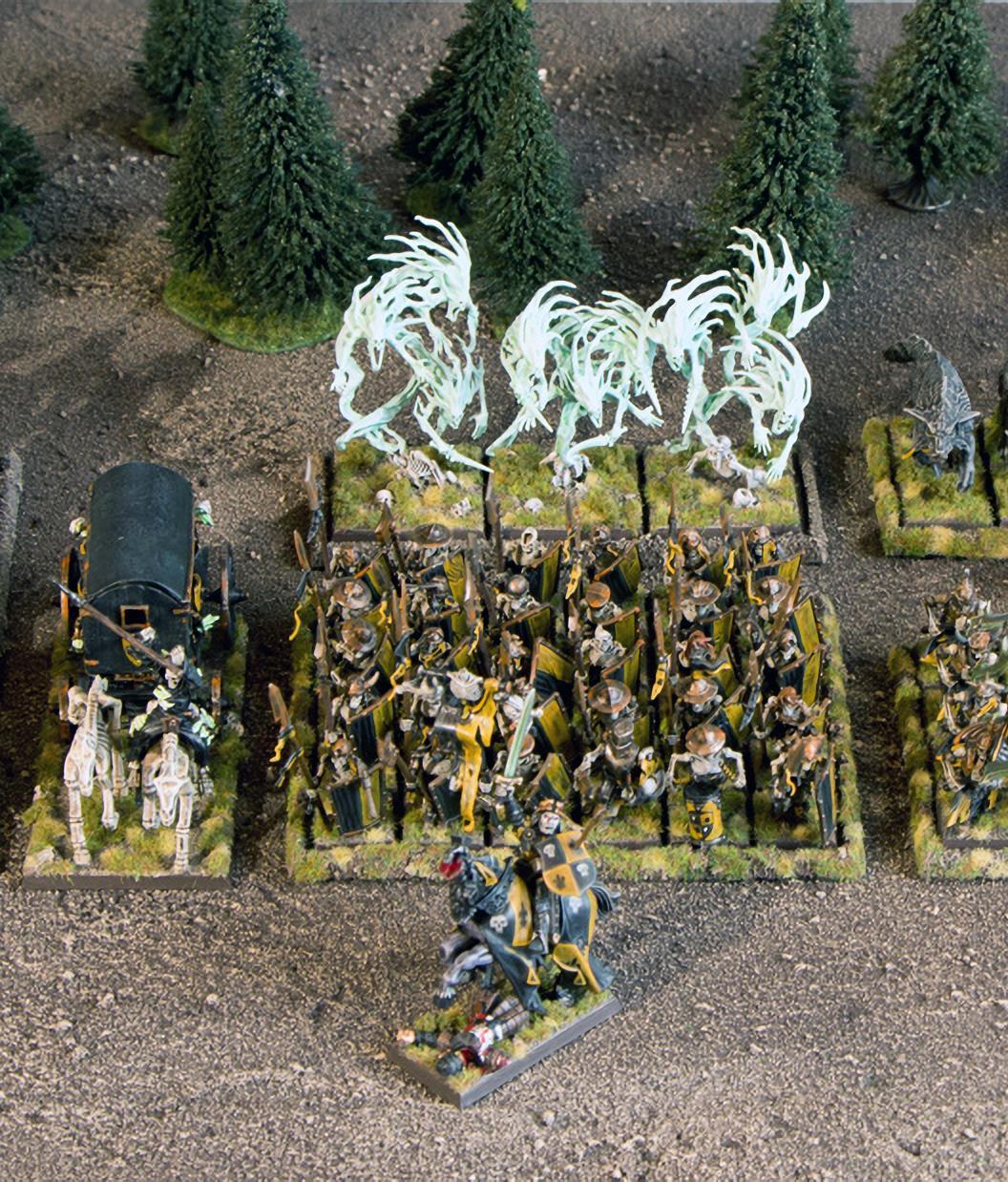
of the Alliance Against Undeath. He uses a Hero choice.
Equipment Scarloc carries an Asrai
bow, the arrows of the Hail of Doom Arrow,
and the Rune Sword of the Darkwoods.
Special Rules: Always Strikes First,
Forest Strider, Scarloc Archers.
Scarloc's Archers: If you select
Scarloc, you must also include a
unit of Deepwood Scouts in your
army, paying the cost indicated in
the Special Units section. This unit
should be designated as Scarloc's
Archers, the cost of this upgrade is
included in Scarloc's cost and they
have the following special rules:
Command Group: The unit automatically has a
special command group and no other option is
possible and no other character can
join them: • Glam the Laugher
serves as unit champion. Glam is
a Bladesinger and has two hand
weapons instead of the Asrai bow.
He follows all the rules of the
Bladesingers.
•
Kaia
Stormwitch
serves as standard bearer. Kaia
always carries the Standard of the
Valiant Heart, and has the special
rule Storm Witch. If the standard
bearer is removed as a loss, this
special rule is lost. • Araflame
Skaldeguerre serves as a musician.
Araflame has the Horn Carynx.
Unlike
the
other
musicians,
Araflame is considered a loss if the
regiment flees (in the same way as a
standard bearer).
Storm Witch: Kaia can cast the
Urannon's Thunderbolt as a bound spell
item (power level 3).
Scarloc .............................................................................................. 205 points
Scarloc is an unofficial character. He can be added, with your opponent's agreement, to any army of Wood Elves or
Magic Items
Hail of Doom Arrow (Scarloc)
This powerful artifact was obtained by
magically linking several enchanted
bolts that separate in flight, forming a
deadly cloud. Scarloc gets his arrows
when he arrives in Athel Loren which
corresponds to the time of his name
change. A veil of mystery surrounds
this story. See the rules in the Wood
Elves army book page 63.
Darkwood
Rune
Sword
(Scarloc)
Scarloc found this sword in the depths
of Laurelorn. The runes engraved on
it, unknown even to the oldest elven
mages, could suggest that the weapon
was
forged
by
the
Zoats.
Magic
weapon. Grants the Armour Piercing special rule.
Standard of the Valiant Heart (Kaïa
Stormwitch)
The
latter
is
incorporated
with
a
heart-shaped
shrine containing the ashes of the
heart of Kern, legendary hero of the
elves,
who
galvanizes
archers
in
combat. Magic Standard. Allows the
unit to benefit from a rank bonus, to
be indomitable and to disorganize an
enemy with a flank or rear attack even
if they are skirmishers.
Carynx,
the
Horn
of
Beasts
(Araflame Skaldeguerre) This war
horn strikes terror into the
hearts of the enemies of the elves.
Causes Fear in non-Elves.
Authors: Dreadaxe, with help from WarFo.
Sources:
Box
of
the
Regiment
of
Renown, White Dwarf UK n°92; Wood
Elf army books for Warhammer 5, 6 and
8 edition;
Citadel Journal No. 28; Unofficial
adaptation by Raza Decon, The Elves of
Laurelorn by Tim Eccles, Alfred Nuñez
Jr and Marin Oliver.
M
WS
BS
S
T
W
I
A
Ld
Type
Scarloc
5
6
6
4
3
2
7
3
9
Infantry
(special character)
36
These keen-eyed missiles are deadlier
than projectiles and always return to their
master with blood dripping from their
beaks and claws. Once the enemy is
defeated, Skaw always returns to his
mountains without saying a word. In fact,
many Asrai believe he has forgotten
the language of the elves, for it has been a
long time since he was heard to speak a
word in a language other than that of the
birds of prey.
The Feather Cloak Assembled by
Skaw himself from hundreds of
eagle feathers, the density of this
cape makes it incredibly resistant to
arrows
and
other
projectiles.
Grants an armour save of 4+ against
ranged attacks.
Hawks Skaw has three birds of
prey that he uses as ranged
weapons and as melee weapons.
Skaw can make 3 shooting attacks,
which always hit on a 2+ with a
range of 24" and a Strength of 4.
Skaw can only designate one
target for the 3 shots. In addition,
in close combat, hawks grant 1D3
additional attacks.
Authors: Jalikoud, with the help of WarFo.
Sources: Wood Elves Army Book for
Warhammer 5 edition; Update on the site
Games Workshop for the 6 edition.
It is said that the Falconer lives in an eyrie at
the top of an old pine tree in the company of
his falcons. There he speaks to eagles and
birds of prey. He avoids the company of
other elves but fights alongside them if the
forest is threatened by enemies. At these
times, the scouts and clans go to great
lengths to encourage him to join them. He
commands his falcons in flight, directing
them with calls, using them as formidable
weapons falling from the sky. These
of the Alliance Against Undeath. He uses a Hero choice.
Special Rules: Always Strikes First,
Forest Strider
The Falconer is a loner and
can never join a unit. Additionally,
he is so distant with Asrai society
that he cannot use the General's Ld
nor can he become the general.
Magic items
The Talon Whip Each of the three
straps of this whip ends with a claw
of gigantic birds of prey, now
extinct. Lighter than a regular whip,
this weapon is a deadly tool in the
hands of Skaw, capable of lacerating
an enemy's flesh with even a light
blow. Any model hit by the whip
loses 1 attack (to a minimum of 1)
for the rest of this turn.
Skaw ..................................................................................................... 110 points
Skaw is an unofficial character. He can be added, with your opponent's agreement, to any army of Wood Elves or
M
WS
BS
S
T
W
I
A
Ld
Type
Skaw
5
6
6
4
3
2
7
3
9
Infantry
(special character)
Special Rules: Always Strikes First, The Feather Cloak
SKAW THE FALCONER
37
forest.
no other options.
Wood Elf, © Games Workshop
Sceolan is the oldest and most cunning of the Wood Elf warriors. He fights on foot and will
usually lead warriors of his own Oakwood kin. Not only does he use the longbow, but he is
an expert in close combat and enjoys setting up ambushes in the depths of the
Sceolan the Old .............................................................................. 110 points
Sceolan is a Hero choice in an army of Wood Elves. He must be taken as described below, without
Equipment:
Hand
weapon,
light
armour, Loren's Bow, Bronze Buckler.
Special Rules: Always Strikes First,
Forest Strider, Talon of Kurnous.
Loren's Bow: See the Wood Elves Army
Book for Warhammer 8 edition, page 62.
Bronze
Buckle
(magical
Armour):
Sceolan wears a buckle instead of an
ordinary shield. It is a small shield
with a pointed bronze boss, and
numerous bronze studs arranged in
arcane patterns. Not only does it ward
off enemy blows, but it can be used to
retaliate. Shield. For each melee
Attack having obtained a result of 1 to
hit against Sceolan, Sceolan gains
from a Stomp attack.
Sources: Wood Elves Army Book
for Warhammer 4 edition.
Update: Ilmarith.
M
WS
BS
S
T
W
I
A
Ld
Type
Infantry
Sceolan
5
6
6
4
3
2
7
3
9
(Special character)
SCEOLAN THE OLD
38
It is said that the first of all these
Chevaliers-Moires is Sacremor, the Green
Knight himself, in reality the spirit of Gilles
le Breton whom the Lady first elected to be
her herald and guardian. When Gilles
returned to the throne during the End
Times, and the flower of Bretonnia left to help
the Empire, leaving only the Grail Knights
to protect its holy places, an entire army of
spirit knights materialized during each of
Gilles' battles to let him direct the Lady's fury
against Chaos.
When Lileath confessed that she was the
Lady of the Lake, the last warriors of
Bretonnia turned away from her, but the
Chevaliers-Moires, faithful to their oath for
eternity, continued to fight the Chaos
which assailed Haven and to fight
alongside Gilles to save what remained of
Bretonnia.
Grail, by KingArttu
the outcomes stated in the Conclusions of the Game Guide
The Chevaliers-Moires are the guardians of
Haven, this world created by Lileath with the
help of Eldyra, the heir of Ereth Kial, to
protect her precious daughter during the End
Times.
Since the founding of Bretonnia, the Lady of
the Lake had collected the souls of the
knights who perished in her service, and
hidden these spirits beneath the surface of
the mirror lakes, where the spirit of the Lady
was most powerful. Alongside these knights,
she also placed the spirits of the stolen
children of Bretonnia who were taken by the
Lady during their youth because they
possessed latent magical powers.
During his Quest for the Grail, young
Louen crossed a mirror lake and found
himself beneath its surface, invaded by the
grace of the Lady. He resurfaced at the
head of an army of Chevaliers-Moires in order
to destroy his enemies. Once the battle was
over, the spirits evaporated.
Knight spirit of
The following rules do not directly concern the Revolt of Mallobaude campaign, as they
concern changes that take place after the campaign. But you can use them in your battles that
take place after it, and throughout the rest of the End Times (according to
AFTER THE CAMPAIGN
MOIRE KNIGHTS
39
Any Bretonnian army may include Chevaliers-Moires in
Unit
size:
3+.
Equipment
Hand
weapon, Lance, Heavy armour,
Shield,
Barding.
Mount
Fey
Steeds
are
enchanted
mounts
originating like the Sacremor's Shadow
Steed from the world of the Lady's
Mists, therefore they are not subject
to movement penalties due to wearing
barding. Options - Upgrade a
Chevalier-Moire to a Musician for +10
points - Upgrade a Chevalier-Moire to a
Standard Bearer for +10 points - The
unit can carry a magic banner up to 50
points
Special Rules
Knight of the Haven Ethereal, Fear,
Unbreakable, Unstable. Grail Vow The
Chevaliers-Moires have sworn the Grail
Vow. Guardians of Haven The unit
counts as a level 2 wizard who knows
the spells Vigour of Spring (Lore of
Life)
and
Lightning
of
Urannon
(Lore of Heavens). This does not
prevent other wizards from knowing
these same spells. The unit receives a
+1 bonus on its casting rolls for each
rank of at least 3 models beyond the
first, up to a maximum of +3. Each
time the unit casts a spell, you must
designate a Chevalier-Moire as the caster
of the spell to determine line of sight
and range. If the unit suffers a miscast,
do not make any rolls in the Miscast
table, instead it loses 1 Wound with no
armour save. If affected by an ability
targeting
a
wizard,
the
opponent
designates a Chevalier-Moire as the target.
Chevaliers-Moires ......................................................... 60 points per model
as a Rare unit choice.
Aura of the Fay Just like the Sacremor, the
Chevaliers-Moires can no longer die, and
their
disappearance
can
only
be
temporary. If a unit of Chevaliers-Moires is
destroyed, it disappears. At the start
of the next movement phase, roll 1D6
for each model in the unit. On a 3+, the
model reappears. The first model to
reappear is the Musician; the Standard
Bearer can never reappear (so roll one
die less than the initial number of
models in the unit during the first
reappearance). If the unit disappears
again during the battle, the difficulty of
the die is increased by 1 for each new
disappearance. Any model that fails to
return once will not be able to do so
again for this battle. Royal Bodyguard If
your army includes, in addition to a unit
of Chevaliers-Moires, Gilles the King of
Bretonnia
or
Sacremor
the
Green
Knight, then this character must be
deployed in the unit and cannot leave it.
If the unit is destroyed, it can
reappear as indicated in the Aura of the Fay
rule; in this case, Gilles / Sacremor is
the first model to return to the battlefield
(the musician being the second).
Author: DaKatarn, with help from
Dreadaxe,
Ilmarith
and
Thindaraïel. Sources: Biography of
Louen Leoncoeur (White Dwarf);
Bretonnia
army
book
for
Warhammer 5 and 6 editions; army
book
Unofficial Bretonnia by Mathias Eliasson
for Warhammer 8 edition; Doomfire Warlock unit
from the Dark Elves army book
for Warhammer 8 edition.
M
WS
BS
S
T
W
I
A
Ld
Type
Chevalier-Moire
4
5
3
4
4
1
5
2
9
Cavalry
Fey Steed
8
3
0
3
3
1
3
1
5
40
Special Rules
Errantry War:
Unsurprisingly, a Crusade army is
made up of young Knights Errant.
This is the only unit that counts
towards the Core percentage, so
you will need to have 25% Knights
Errant.
Experienced Leader: Grail Knights
often join the ranks of young knights
to guide them. Instead of taking a
normal champion, Knights Errant
units can take a Grail Knight as their
Champion for +22 points.
Errantry Fervour:
All
Knights
Errant units must carry a banner, which
will have the effects of the
Errantry Banner for free (they cannot choose
another).
Glory or Death: The Crusade further
exalts
the
already
usually
enthusiastic Knights Errant about
the glory that awaits them. Knights
Errant suffer additional penalties
on their Impetuosity tests:
• -1 if at least one fear-causing
creature is within charging distance. •
-1 if at least one terror-causing
creature is within charging distance. •
-1 if at least one dragon is within
charging distance. • -1 if at least one
Damsel is within 6" (they like to roll
mechanics in front of damsels). • -1 if
at least one enemy horde is within
charging distance.
Additionally, Knights Errant must always
pursue. They roll one more die to keep
only the best ones when determining their
pursuit distance.
You will find the rules for the different
units in the following books: Bretonnia
(Br), The Revolt of Mallobaude (RM).
Lords
• Louen the High Paladin
(RM) • Bretonnian Lord (Br)
Hero
• Damsel (Br) •
Paladin (Br)
Core Units
• Knights Errant (Br) •
Knights of the Realm (Br) •
Men-at-Arms
(Br)
•
Peasant Bowmen (Br)
Special Units
• Questing Knights (Br) •
Mounted Yeomen (Br) •
Pegasus Knights (Br)
Rare Units
• Trebuchet (Br) •
Grail Pilgrims (Br)
Sources: Storm of Chaos for
Warhammer 6 edition. e
CRUSADE ARMY
41
The profiles below represent these developments.
Louen de Couronne, the High Paladin
Gilles.
Louen, the High Paladin, uses the same
rules as Louen, King of Bretonnia, with
the following exceptions:
• He no longer wears the Crown of
Bretonnia, and can therefore no longer
benefit from its advantages. Reduce his cost
by 25 points.
Louen the Dispossessed, Wandering Paladin
Mallobaude the Vampire King.
Louen, the Wandering Paladin, uses the
same rules as Louen, King of Bretonnia,
with the following exceptions:
• He no longer wears the Crown of
Bretonnia, and can therefore no longer
benefit from its advantages. Reduce his cost
by 25
points. • The shock of discovering his
kingdom transformed into a territory of
death affects him deeply, so he has the
Hatred (Undead) rule for free.
Authors: Thindaraïel, with the help of Dreadaxe and Ilmarith.
Following the conclusion of the campaign, the special characters Louen, Mallobaude or Sacremor can be modified.
Louen the High Paladin depicts the ex-king as he returns from the Silverspire to find his kingdom ruled by the King
Louen the Dispossessed depicts ex-king Louen, as he returns from the Silverspire to find his kingdom conquered by
• No longer King, he can no longer
use the list of the King's Army. • On the
other
hand,
he
becomes
the
commander-in-chief of the crusade armies
commanded by Gilles, and many Grail knights
who are loyal to him join him. If Louen is present in
a Crusade army, Grail Knights taken as
Knights Errant champions only cost +12
points instead of the usual additional cost.
• No longer King, he can no longer
use the list of the King's Army. • Like all
knights-errant now orphaned by their
country which has become an undead
kingdom,
he
can
no
longer
join
a
Bretonnian army (nor a Crusade), as it no
longer exists. He counts as an Ally of the
Order armies.
THE KINGS OF BRETONNIA
42
Thindaraïel.
Gilles le Breton, King of Bretonnia .............................................. 500 points
Gilles le Breton, King of Bretonnia, is an unofficial character, representing Gilles resurrected by the Lady and
having abandoned his role as Green Knight. He can be added, with your opponent's agreement, to any army in
Bretonnia and counts as a Lord's choice. He must be taken as presented here, and has no options.
Sources: Bretonnia army book for Warhammer 5 and 6 editions; Unofficial Bretonnia army book
by Mathias Eliasson for Warhammer 8th edition; Grail Knights Supplement for Warhammer Game
Author: DaKatarn, with help from Dreadaxe, Ilmarith and
Roleplay, 2nd Edition.
M
WS
BS
S
T
W
I
A
Ld
Type
Gilles le Breton
4
8
3
4
4
3
7
5
10
Cavalry
Shadow Steed
9
4
0
4
3
1
4
2
6
(special character)
43

Equipment: The Dolorous Blade, the Silver Lance of the Blessed, Armour of the Green Knight, shield, Crown of Bretonnia, and barding.

Mount: The Shadow Steed comes from the world of the Lady's Mists and suffers no movement penalty for wearing barding.

The Crown of Bretonnia (Enchanted Item): No one knows the smith who made the Crown, for the Lady herself gave it to Gilles millennia ago. This ancient symbol of authority passed unbroken from king to king before returning to Gilles in 2522. Allied units may use the King's Leadership within 18". A unit with line of sight to the King is also Immune to Psychology.

The Dolorous Blade (Magic Weapon): This unique blade, adorned with floral motifs, shimmers with a magical aura and is not of this world. In each close combat phase, Gilles may use it to gain either +D6 Attacks or +2 Strength.

The Silver Lance of the Blessed (Magic Weapon): Forged by Gilles, it can be wielded only by a knight with a pure heart. Attacks made with the lance hit automatically. Successful armour and ward saves against them must be re-rolled.

Armour of the Green Knight (Magic Armour): Forged by the fey, this armour protects the King as though the Lady had placed part of her power within it. Gilles has Magic Resistance (2).

Special Rules

Knight of the Haven: As the former Green Knight, King Gilles retains a supernatural, magical essence. In battle he seems imbued with ancient magic and does not fear mortal blades. He has the Ethereal, Terror, Unbreakable, and Unstable special rules. Gilles may join or leave any Bretonnian unit despite being Ethereal.

Grail Vow: Gilles le Breton has taken the Grail Vow.

Virtue of the Monster Slayer: Gilles fought and defeated many beasts that haunted the Massif Orcal, including a great drake. Their heads became trophies upon his fortress walls. Gilles has the Heroic Killing Blow special rule.

Lady's Blessing: Gilles always benefits from the Lady's Blessing, giving him a 5+ ward save whether or not the army prayed.

Aura of the Fay: Gilles is more than a mortal; his soul remains linked to the Lady's Haven, beyond mortal ideas of life and death. If his Wounds are reduced to 0, he disappears. Roll a D6: on a 3+, he returns beside a forest or natural terrain feature in the Bretonnian player's next Movement phase. The required roll rises to 4+, then 5+, then 6+ each time he disappears again. If the roll fails, he is slain for the rest of the battle.

Beloved King of Bretonnia: Gilles must be the army's General. If he is slain after failing to return, every Bretonnian unit must take a Panic test and becomes Stubborn.

Mallobaude was already uncompromising
during his lifetime, and cruel after receiving
the Blood Kiss. After his coronation, he
became despotic. The last dukes and barons
still loyal to the ideals of chivalry were
mercilessly hunted down and killed by the
minions of the Vampire King, and the feeble
attempts of Bretonnia's historic allies - the
Asrai as well as a few small armed forces
from the Empire and Estalia - already
severely
tested
by
the
war,
were
systematically
repulsed.
Mallobaude
immediately enslaved the entire population,
installed his own dynasty of vampires on the
ducal thrones, violently suppressed any
revolt, including those of his own offspring,
and bathed his reign in blood.
Equipment Lance, heavy armour,
Maldred's Black Blade, Mousillon's
Cursed Shield, Malfleur's Chalice (see
Vampire
Counts
army
book
for
Warhammer 8 edition, page 40).
Mount Dragmor is a Zombie Dragon
(see Vampire Counts Army Book 8
edition) possessing
the rules Large Target, Undead, Cloud of
Flies, Scaly Skin (5+), Pestilential Breath,
Terror, Flight. Special Rules: Sworn
Enemy of the Lady (see page 18), Lord of
Death, Vampire of the Blood Dragon
Bloodline, Honour or Death, No Mortal Son
(see Vampire Counts Army Book 8
edition,
page
41).
Reviled King
of
Bretonnia
As
King
of
Bretonnia,
Mallobaude must be the general of the
army.
If
Mallobaude
is
killed
all
Bretonnian units take a Panic test.
Mallobaude the Dragon, Vampire King of Bretonnia is an unofficial character, representing Mallobaude after he has
become King. He can be added, after your opponent's agreement, to any army of Mousillon, Vampire Counts or
Legions of Undeath and counts as a Lord's choice. He must be taken as presented here, and has no options.
Modifying his coat of arms with the image of
one of the last dragons of Bretonnia which
he killed and had brought to life by his
necromancers to make it his mount, he
became Mallobaude the Dragon, the first
Vampire King of Bretonnia, slayer of Chaos.
The Norscan ships that landed in the years
that followed were thrown back into the sea;
the herds of beastmen which were emerging
in ever greater numbers from the woods
were destroyed and reanimated in order
to better counter those that followed; the
rifts in reality that spewed Daemons into the
blackened lands of Bretonnia were closed by
necromancers
through
bloody
rituals.
Through his iron fist, Mallobaude succeeded
where Vlad and Mannfred failed to create a
kingdom of undeath.
Magic Mallobaude is a level 1
wizard who can use one of the
following Lores: Lore of Vampires,
Death, Shadow, or Undeath.
Magic Items The Crown of Bretonnia
(Enchanted Item) No one knows the
blacksmith who made the Crown of
Bretonnia since it was offered by the
Lady herself to Gilles millennia ago. This
ancient symbol of authority was passed
down through time uninterruptedly to
each new King until it was worn by the
Vampire King in 2522. Having become a
symbol of tyranny, even its sacred magic
seemed to be withered by its new owner.
Allied
troops
can
use
the
King's
Leadership within 18". An
Undead unit with line of sight on the King
loses one fewer Wound
when the Unstable rule is resolved.
M
WS
BS
S
T
W
I
A
Ld
Type
Mallobaude the
6
9
5
5
5
3
7
5
10
Monster
Vampire King
(special character)
Dragmor
6
4
0
6
6
6
2
5
4
Mallobaude the Dragon, Vampire King of Bretonnia
750 points
44
The final battle of the Year
of Woe was the Siege
of Mousillon. The Tzeentch
Daemons
of
Kairos
were
searching for the last relic
located in the castle. Those
of Nurgle led by Ku'gath
aimed only to prevent the
destruction of the walled
city.
Finally,
Arkhan
believing that the Daemons
wanted to hinder his plans
to
resurrect
Nagash,
ordered Mallobaude to ensure the
Daemons be repelled at all
costs without letting them
enter the keep. At the
height of the assault, the
Bretonnian army attempted
a desperate sortie, just as
Ku'gath called in his troops.
A
complex
battle
then
began.
ARMIES Players agree in advance on the
value of armies. One of the armies is taken
from the Bretonnia army book. It must
contain
Mallobaude,
Black
Knight
of
Mousillon (see page 19). It represents only
50% of the chosen value. The second army is
a Chaos Daemon army. It must contain
Kairos Fateweaver, and cannot
contain any models bearing the Daemon
of Khorne, Daemon of Slaanesh, or Daemon of
Nurgle rules. The third army is an army of
Chaos Daemons. It must contain Ku'gath,
Plaguefather, and cannot contain any
models bearing the Daemon of Khorne,
Daemon of Slaanesh, or Daemon of Tzeentch
rules.
SETUP The game table is set up according
to the diagram opposite. Place the
terrain features outside the fortress following
the usual rules, except that the Bretonnian
deployment zone cannot contain any
terrain features (it is an open space in front of
the castle). Mallobaude's army is deployed
first. War machines must be deployed in
the fortress, missile units can be
deployed in the fortress. All other units, as
well as Mallobaude, must be deployed
outside the fortress. Once the army of
Mallobaude is deployed, place the army of
Kairos then that of Ku'gath. FIRST
TURN The first turn is played in this
order: 1. Army of Kairos 2. Army of
Ku'gath 3. Army of Mallobaude The order
of play during the following turns is
determined according to the rules of the
Triumph & Treachery supplement. Authors:
Ilmarith, with the help of Dreadaxe and
Thindaraïel.
SCENARIOS
The following pages present the rules for the campaign's unique scenarios. You can also reuse them outside this campaign by
adapting the forces involved, for example.
DAEMONIC ASSAULT ON MOUSILLON
45
DURATION OF THE GAME
The battle lasts 6 turns.
SPECIAL RULES
Multiplayer Battle (see Triumph & Treachery); No One Can
Be Trusted (see Triumph & Treachery, p. 16); Chaos
Ascendant: Tzeentch (see The End Times: Glottkin).
Fortress: If the fortress is used, also use Sharing Defensive
Units (see Blood in the Badlands, p. 89), Moving in the
Fortress, Shooting from the Fortress, and Attacking the
Fortress (p. 90).
Last Hope: This is Mallobaude's army's last chance for
victory. It makes a desperate sortie and leaves the fortress
gates open; they cannot be closed.
VICTORY CONDITIONS
The winner is determined by the opposing generals slain.
• Kairos's army scores 3 points if it kills Mallobaude and 1
point if it kills Ku'gath.
• Ku'gath's army scores 3 points if it kills Kairos and 1 point if
it kills Mallobaude.
• Mallobaude's army scores 1 point if Kairos is slain, plus 1
additional point if it delivers the killing blow. The same
applies to Ku'gath.
The winner is the army with the most points (each army can
score 0 to 4). If tied, use victory points as the tiebreaker.
DEPLOYMENT
Kairos deployment zone
Ku'gath deployment zone
Mallobaude deployment zone
The Bretonnian force is placed
inside the fortress. If no fortress
is used, deploy it in the marked
zone.
46
It was on the outskirts of the
Forest of Châlons that Duke
Armand
of
Aquitaine,
supported by the magic of
Morgiana the Fay herself,
confronted the forces of
Mallobaude.
During
the
battle, Morgiana the Fay
mysteriously disappeared. It
was only much later that it
was discovered that she had
been kidnapped by Drycha
the
Branchwraith.
The
disappearance of Morgiana the Fay
caused the defeat of the
Duke of Aquitaine.
ARMIES Players agree in advance on the
value of armies. The Rebel Army is taken
from the Bretonnia army book. It must
contain
Mallobaude,
Black
Knight
of
Mousillon (see page 19). The Loyalist Army
only represents 75% of the set point value. It
must include Armand the Duke of Aquitaine
(see page 12). It also contains, free of charge,
Morgiana the Fay. It cannot contain any
other dukes or other special characters. On
the other hand, the loyalist player also sets
up a Wildwood Host (see page 25) of 50% of
this value. This army must contain Drycha
and cannot contain Coeddil.
SETUP The game table is set up according
to the diagram opposite. The table must
contain
numerous
wooded
terrain
representing the Châlons Forest. Only the
armies of Mallobaude and Armand are
deployed. The Wildwood Host is not
deployed (See the Briarmaven of Woe
rule). FIRST TURN The Rebel player
goes first. DURATION OF THE GAME
The battle lasts 6 turns. Authors: Ilmarith
and Thindaraïel, with help from Dreadaxe.
THE BATTLE OF CHÂLONS
47
SPECIAL RULES
Civil War (Bretonnia only; the Spirits are
unaffected).
The Briarmaven of Woe: At the start of
turn 3, the Wildwood Host enters through
the woods. Deploy each unit within 3" of a
wood and more than 6" from an enemy.
The Host may act normally. To represent its
treacherous purpose, at the start of each
Rebel turn roll a D6; on a 5+, the Rebel
player may use any unengaged Spirits as
part of their army. Engaged Spirits remain
unaffected and keep fighting.
Mannfred's Spoils: If a Host unit comes within 3"
of Morgiana, it abducts the Fay Enchantress, who
is removed from the table. The entire Host then
passes to the Rebel player's control. Host units
fighting Rebels immediately disengage and are
placed 1" away. If the unit carrying Morgiana
reaches a table edge or enters a Forest, it escapes
and she is permanently captured. If that unit is
destroyed first, place Morgiana back on the table
within 3" of its final position.
VICTORY CONDITIONS
Use the normal victory conditions for a pitched
battle.
Drycha's betrayal and Morgiana's
abduction do not alter the victory
conditions, but they greatly change
the balance of forces.
DEPLOYMENT
Armand's deployment zone
Mallobaude's deployment zone
Forest
48
Mallobaude
revealed
himself as a vampire, and
Arkhan lifted the veil on the
legions of undead that he
was
gathering
from
the
numerous victims of the
civil war. Louen, for his
part, sorted out his true
allies and the criminals he
had
to
punish.
He
also
gathered his army, at the
gates of Quenelles, and this
is how father and son faced
each other, in the battle
which decided the turning
point of the war.
MULTIPLE BATTLE The Battle of Quenelles
is a multiple battle. Play two battles
representing the clashes on the flanks of the
main battle. These battles will influence the
course of a third battle located in the centre
of the field.
ARMIES Players agree in advance on the
value of armies. Choose a high points value,
because the armies will be split into
several parts anyway. The Rebel Army is
taken from the Mousillon list. The
Loyalist Army is drawn from the Alliance
Against Undeath list. Each of these two
armies must be separated into 3 forces.
No force may exceed
the sum of the other two. Named
characters can only appear in one of the
three forces. See both scenarios for force
composition constraints specific to each
battle. Authors: Ilmarith and Thindaraïel,
with help from Dreadaxe.
THE BATTLE OF QUENELLES
49
While
Louen
faced
his
rebellious son in the centre
of
battle,
Louen's
allies
faced Mallobaude's closest
servants. Thus the loyalist
and rebel dukes settled their
scores while the Fay Folk of
the
forest
fought
the
necromancers.
ARMIES See the Battle of Quenelles rules
for army composition. You will play the
scenario twice, with two different Rebel
armies and two different Loyalist armies.
One of the Rebel armies must contain
Arkhan the Black, the other must contain
Heinrich Kemmler and Krell. It is advisable
to add rebel dukes. One of the Loyalist
armies must include Orion, the other must
contain Ariel (see page 33). SETUP Each
battle takes place on an identical table. The
setup is that of a pitched battle. Ariel's army
is near Athel Loren. Place more forests on
the half of the table where Ariel's army is
deployed.
FIRST TURN The Loyalist player goes
first in the battle where Orion is located.
The Rebel player goes first in the other
two battles. DURATION OF THE GAME
Each battle lasts 6 turns. CONDITIONS
OF VICTORY The winner is chosen under
the usual conditions of pitched battle.
SPECIAL RULES Flank Battles At the end
of the first two battles, determine the
winner. That player may select 50% of
the units remaining on their table, in order
to send them as reinforcements during the
3rd battle. The Loyalist player may find it
interesting for the Loyalist player to send
Orion or Ariel as reinforcements who,
through their power and their Forest
Spirit
rule,
almost entirely
neutralize
Mallobaude's
No
Mortal
Son
rule.
Authors: Ilmarith and Thindaraïel, with
help from Dreadaxe.
THE BATTLE OF QUENELLES - ON THE FLANKS
50
THE BATTLE OF QUENELLES - FATHER AND SON
51

At the centre of the battlefield, father and illegitimate son finally face one another. The Lion and the Serpent meet to settle their differences.

Note: If Mallobaude has not revealed himself:

  • Use the rules for Mallobaude the Black Knight instead of Mallobaude the Vampire Duke.
  • Use the Bretonnia army list instead of the Mousillon army list.
  • If Mallobaude is defeated, his army takes Panic tests in the same way as the Loyalists if Louen is defeated.
  • Use the Bretonnia army list instead of the Alliance Against Undeath.
  • Do not play the Flank Battle; ignore the Central Battle special rule.

The players agree in advance on the points value of the armies. The Rebel army is chosen from the Mousillon list and must include Mallobaude the Vampire Duke (see page 19). The Loyalist army is chosen from the Alliance Against Undeath list and must include King Louen and Duke Tancred (see page 13).

SETUP Use the Pitched Battle setup.

FIRST TURN The Rebel player takes the first turn.

GAME LENGTH The battle lasts 6 turns.

VICTORY CONDITIONS Determine the winner using the normal Pitched Battle victory conditions.

SPECIAL RULES

Civil War (Bretonnia).

The Throne is at Stake: If Louen is defeated in close combat, the Bretonnians lose heart and must immediately take a Panic test. They must then take another Panic test at the start of each of their turns until the battle ends. If Mallobaude is defeated, the Undead army loses cohesion and must immediately take an Instability test, then another at the start of each of its turns.

Clash of Leaders: Louen and Mallobaude each add 1" to the distance of any normal move, march or charge made directly towards the other by the shortest possible route.

Central Battle: The third battle begins normally. Reinforcements from the other two battlefields then arrive. From the 3rd turn, the active player rolls one D6 for each reinforcement unit during the Remaining Moves sub-phase. On a 5+, that unit may enter the battlefield using the Reinforcements rule. When the first unit arrives, its player chooses one short table edge; every unit from that battle enters from that edge. Units from the other battle enter from the opposite edge.

Units that have lost models do not recover them and arrive at their current strength. Likewise, wounded characters do not recover Wounds. Abilities and special rules that may be used once per battle, such as a Dragon's Breath weapon, are recharged and may be used during the central battle.

Authors: Ilmarith and Thindaraiel, with help from Dreadaxe.

Arkhan guides Mallobaude's
troops in the assault on
Maisontaal. In reality, this
has been his objective for
more than two centuries,
and
the
success
of
his
protégé finally allows him to
attack
the
fortified
monastery. The crypt he
protects contains an ancient
artifact he has long sought.
Play the paired scenarios The Battle of
Maisontaal and Theodoric's Last Charge as
described in Nagash - Book II, with the
following modifications: In the Battle of
Maisontaal • Replace the army of Vampire
Counts with the Mousillon Army.
Arkhan and Heinrich Kemmler must be in
the army.
In Theodoric's Last Charge • Replace the
army of Vampire Counts with the Army of
the Mousillon. Mallobaude the Vampire
Duke and Krell must be included in the army. •
Use Theodoric's rules on page 17.
ATTACK ON LA MAISONTAAL
52
Heinrich Kemmler pledged
allegiance to Chaos long ago.
Tzeentch, sensing Nagash's
return, ordered him to steal
Alakanash,
Nagash's
sceptre, in order to block the
return
of
the
Great
Necromancer. But Arkhan,
the loyal vizier of Nagash,
was not going to let him.
ARMIES Players agree in advance on the
value of armies, which must not exceed 500
points. The first army is taken from the
Vampire
Counts
army
list.
Heinrich
Kemmler is added free of charge. The second
army is taken from the Vampire Counts
army list. Arkhan the Black is added for free.
SETUP The table is very small, representing
the crypt of the abbey. It is a 60 x 60 cm table,
with a flat floor, cluttered with debris (the
masonry of the roof collapsed following the
attack on the abbey). On one side there is the
door to the stairs that lead to the crypt. In
the middle of the other 3 sides there is a
chest. Kemmler's army is deployed first, in
the centre of the table. It cannot be within 5"
of a chest. Arkhan's army is deployed from
the gate. It cannot be closer to a chest than
Kemmler's army. It cannot come within 4" of
Kemmler's army (Kemmler's army must
move forward to make room. The scenario
begins when both armies are fully deployed).
FIRST
TURN
The
player
playing
Kemmler goes first. DURATION OF THE
GAME The battle lasts 5 turns. SPECIAL
RULES Civil War (Vampire Counts). You
can also (but it is not obligatory) use the
Warbands rules. The Crypt of Secrets: If a
unit reaches a chest, it opens it. Roll 1D6,
on a 5+ it contains Alakanash, otherwise it
contains a Ring of Cursed Fire. When a
unit reaches the 2nd chest, it contains
Alakanash on a 4+, otherwise it contains a
Sword of Might. The 3rd chest must contain
Alakanash. Alakanash: Only Kemmler and
Arkhan can carry Alakanash. They must
therefore reach the chest where the object
is located to take it. They can then move
around with it. VICTORY CONDITIONS If
Kemmler or Arkhan is killed, his opponent
immediately wins the game. If Kemmler
or Arkhan holds Alakanash and reaches
the crypt door, he immediately wins.
Otherwise, the winner is the one who
possesses Alakanash at the end. If neither
has found Alakanash before the end of the
5th turn, it is a draw. Authors:
Thindaraïel, with the help of Dreadaxe
and Ilmarith.
DUEL OF NECROMANCERS
53
Finally
the
army
of
Mallobaude, having crushed
those of most of the loyalist
duchies, presented itself at
the gates of Couronne. The
throne was within reach of
Mallobaude,
its
previous
occupant now gone. The last
loyal
dukes
had
hastily
gathered what troops they
had left, and at their head
was Sacremor, the Green
Knight, alone embodying
the hope of the Lady of the
Lake
to
bring
peace
to
Bretonnia. Mallobaude, as
he had become accustomed
to doing since his victory at
Quenelles, challenged the
army to a duel, certain of his
victory. But it was Sacremor
who took up the gauntlet…
ARMIES Players agree in advance on the
value of armies. The Rebel army is taken
from the Mousillon army list, and must
include Mallobaude the Vampire Duke. It
has +50% points compared to the agreed
value (for example, for a battle decided at
2000 points, the Rebel army actually has
3000 points). The Loyalist army is taken
from the Bretonnia book, and must include
the Green Knight. SETUP The game table is
set up for a siege. The armies are deployed in
the usual order (except Mallobaude and
Sacremor, see the Duel to the Death rule)
FIRST TURN The Loyalist player goes first.
DURATION OF THE GAME The battle lasts
6 turns.
SPECIAL RULES Duel to the Death:
Sacremor and Mallobaude are not placed
at the same time as their armies. They are
deployed in the centre of the table in
base-to-base contact. In the first round of
melee, they are both considered to have
charged. The two fighters are Unbreakable
for the duration of the duel. No unit can
intervene in the duel, they cannot be
charged or targeted (spell, shot, etc.).
VICTORY CONDITIONS If Mallobaude or
Sacremor
dies,
the
game
ends
immediately and his opponent is declared
the winner. If at the end of the 6th turn,
neither duelist is dead, count victory
points as usual. In the event of a tie, it is
the numerical superiority of the Rebels
that decides the result, and they win the
game. Authors: Ilmarith.
THE BATTLE OF COURONNE
54
The Serpent returned to his
hole, pursued by his father
the Lion. Mallobaude watches
his army disintegrating little
by little, his allies betraying
him in the hope of a possible
royal pardon, and he now
takes refuge in his castle.
Louen
Leoncoeur
is
determined to put an end to
the “Mousillon problem”,
the thorn in the side of the
Bretonnian
kings
for
centuries.
After
having
extensively bombarded the
castle, and having ensured
that not a single person
remains alive inside, it is
time for him to launch an
attack to drive out the dead.
ARMIES Players agree in advance on the
value of armies. The Rebel army is taken
from the Vampire Counts army list. It must
contain Mallobaude the Vampire Duke, as
well as a unit of Black Grail Knights. It
cannot contain Kemmler, Krell or Arkhan.
The Loyalist army is taken from the
Bretonnia book, and must include Louen
the Lionheart. SETUP The game table
represents the surroundings of Mousillon
Castle. So you need a fortress. The Loyalist
army is deployed first, then the Rebel army
is deployed in full.
FIRST TURN The Loyalist player goes
first. DURATION OF THE GAME The
battle lasts 6 turns. SPECIAL RULES
Siege (see Blood in the Badlands). The
Dead in the Walls: There are no more
living people in Mallobaude's army.
Therefore, no starvation rolls can be
made.
VICTORY
CONDITIONS
If
Mallobaude or Louen dies, the game ends
immediately and his opponent is declared
the winner. Otherwise, determine the
winner according to the usual siege rules.
THE SIEGE OF MOUSILLON
55
THE REVOLT OF MALLOBAUDE
Mallobaude the Serpent, bastard son of Louen Leoncoeur, takes up arms against his
father. He claims to know the truth about the Grail and the Lady, and vows to destroy
this false faith. Civil war rages as the dukes turn upon one another. Yet in the darkness,
the Serpent's sinister allies prepare a still darker plot-one intended to return a
terrifying figure to the world.
The Revolt of Mallobaude is a Warhammer campaign set on the eve of the End Times.
It may be played as a self-contained campaign with several possible endings, or linked
to the official End Times campaign books to reshape the fate of Bretonnia.
THIS BOOK CONTAINS
• Profiles and rules for the characters and
armies of the civil war;
• Scenarios and general rules for Civil War
battles and the key engagements of the Revolt.
RULES FOR WARHAMMER 8TH EDITION